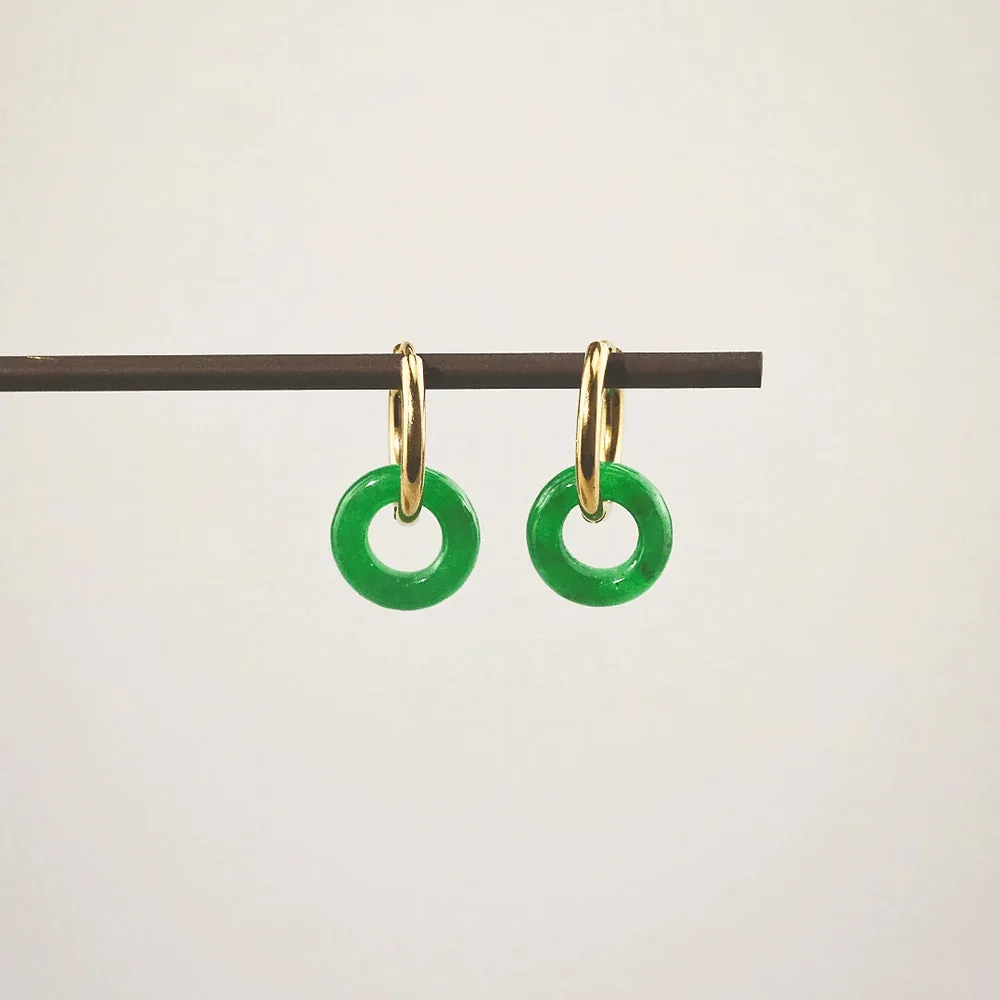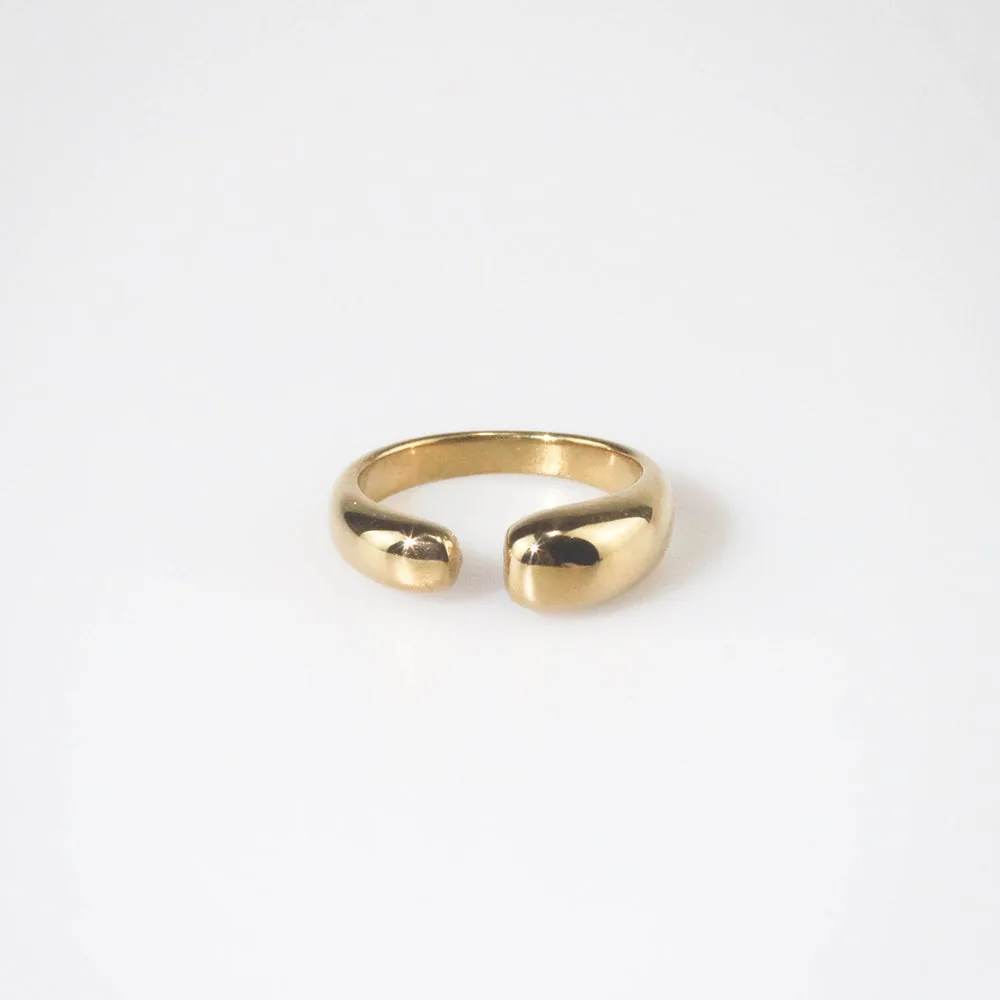
Rings are the one category where a beautiful piece can still walk back to your counter a week later — not because the customer didn't love it, but because it didn't fit. I've been on both sides of that conversation: as a wholesaler shipping thousands of rings to boutiques, and years ago as a shop owner squinting at a knuckle, trying to guess a 6 from a 7. The good news is that ring sizing for boutiques is far more manageable than most owners fear. You don't need a jeweler on staff or a bench. You need the right sizes stocked deep, a $15 sizer set, a two-minute routine, and a few adjustable styles to catch the customers who fall between the lines.
Key takeaways
- Stock the middle, not the tails. US 6–8 carries the vast majority of walk-in demand — go deep there and keep 5s and 9s light.
- You don't need a jeweler. A cheap plastic or metal sizer set plus a printed chart lets any associate size a customer confidently in under two minutes.
- Adjustables are your safety net. Open and adjustable rings absorb the odd sizes and stubborn knuckles, which meaningfully shrinks fit-related returns.
Which ring sizes to stock
The instinct when you first buy rings is to spread your open-to-buy evenly across every size — a couple of each, "to be safe." That's how you end up with a drawer of 4s and 10s gathering dust while you're perpetually sold out of 7s. Demand isn't flat; it clusters hard in the middle for women's fashion rings. Stock to that curve.
Here's how I'd allocate depth for a boutique carrying demi-fine fashion rings. Treat "stock depth" as relative weighting, not a fixed count — scale it to your overall ring budget.
| Size | Stock depth | Why |
|---|---|---|
| US 5 | Light | Real demand from smaller fingers and pinky/stacking looks, but a tail size — carry a token depth in bestsellers only. |
| US 6 | Deep | One of your two workhorse sizes. Buy this heavy in every style you commit to. |
| US 7 | Deepest | The single most-requested women's size in my experience. If you run out of anything, it'll be 7 — overbuy it. |
| US 8 | Deep | Your third core size and important for wide bands worn a touch looser. Keep it well-stocked. |
| US 9 | Light | A tail size like the 5. Carry it in proven styles so larger fingers aren't shut out, but don't spread thin. |
| Adjustable / open | Deep | Your fit insurance. One SKU covers a range of fingers, kills most fit returns, and rescues the 5s and 9s you didn't stock. |
Two practical notes. First, "deep" and "light" are ratios, not headcounts — a small boutique might buy three 7s and one 5 in a given style, and that's the same shape as a bigger shop buying twelve and four. Second, this is the women's fashion curve. If you carry men's rings or signets, the whole distribution shifts up several sizes, so treat that as a separate buy. For the mechanics of building any ring assortment, my Wholesale Rings guide walks through it, and Jewelry Inventory Management covers how to track which sizes actually sell so your next reorder gets smarter.
How to size a customer without a jeweler
You do not need to send anyone to a jeweler, and you shouldn't tell customers to "measure at home" and come back — that's a lost sale. Sizing at the counter is a learned two-minute skill, and here's the whole toolkit.
Buy a ring sizer set. These are cheap — a ring of graduated plastic or metal bands, one per US size, on a keyring. A metal mandrel (the tapered stick) plus a set of steel sizing rings is the sturdier upgrade if you size often. Either way it's a small one-time cost that pays for itself the first time it saves a return.
Fit the sizer, not the eyeball. Have the customer slip the sizer bands on the actual finger they'll wear the ring on — fingers on the dominant hand run slightly larger, and the same person's fingers differ. The right size slides on with a little resistance and, crucially, has to work back over the knuckle without a fight. If it glides on but won't come off, size up.
Account for the knuckle. Some customers have knuckles noticeably larger than the base of the finger. Size for the knuckle so the ring goes on and off — it'll spin a bit at the base, and that's normal and fixable with a sizing bead, better a hair loose than stuck.
Adjust for band width. Wide bands feel tighter than skinny ones at the same measured size. If a customer sizes at a 7 in the thin sizer band but is buying a chunky 8mm ring, nudge them to a 7.5 or 8. As a rule of thumb, anything roughly 6mm and wider wears about a half-size up.
Mind the day and the season. Fingers swell in heat, after salt or exercise, and in the morning. If someone's between sizes, I lean to the larger one — a slightly loose ring is wearable; a stuck one is a return.
A simple size chart you can hand out
Keep a printed size guide at the register and tuck one in every ring purchase — it turns a gift-giver into a confident repeat buyer. You don't need anything fancy. The two methods customers can use at home are the string-or-paper-strip method and the existing-ring method.
The strip method: wrap a thin strip of paper snugly around the base of the finger, mark where it overlaps, and measure the length in millimeters. That number is the finger's circumference, which maps directly to a US size on any standard chart (roughly 51.5mm is a 6, 54mm a 7, 56.5mm an 8 — keep a full chart on the handout). Tell them to measure warm, not cold, and to check it against the knuckle.
The existing-ring method, which I trust more for gifts: take a ring the recipient already wears on the right finger, measure the inside diameter in millimeters across the middle, and match it to the chart. It sidesteps the swelling and knuckle guesswork entirely. Add a friendly line on the handout — "Between sizes? Choose the larger, or ask us about adjustable styles" — and you've pre-answered the most common question.
Print your chart at 100% scale (no "fit to page," which shrinks the reference circles) and note that it's for reference — the counter sizer is always the source of truth.
How adjustable & open rings cut your returns
If sizing still makes you nervous, adjustables are the answer, and they're the reason I tell every new stockist to make open rings a real part of the buy rather than an afterthought. An open ring — the kind with a small gap you gently squeeze or spread — and a wrap or adjustable band both fit a range of fingers from a single SKU. That does three things for your P&L: it collapses the number of sizes you have to stock and track, it lets a customer with a "hard" finger buy on the spot, and it dramatically reduces fit-related returns because the ring meets the finger instead of the other way around.
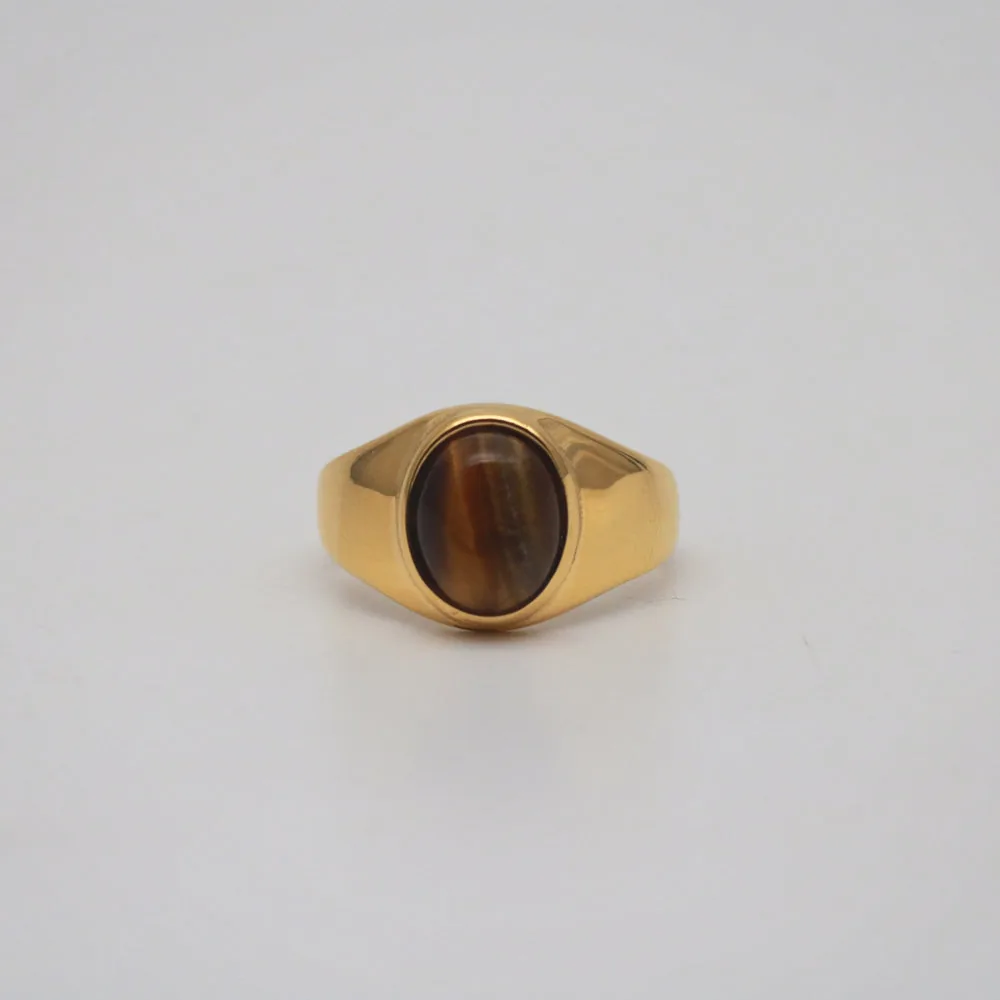
They're also genuinely on-trend — open and adjustable styles read as modern and photograph beautifully stacked. At Couture's Corner our rings are demi-fine: 18k gold-plated over 316L stainless steel, with CZ simulants where there's sparkle, so the plating wears gradually and the pieces are water-resistant for everyday wear rather than indestructible — and every order is backed by our 1-Year Color Warranty. Stainless holds its shape through gentle adjusting far better than soft plated brass, which matters for an open ring that gets reshaped on a customer's finger. Stock a core of fixed sizes in your hero styles, then layer adjustables underneath as your catch-all. You can browse the rings category to see which styles come open or adjustable, and if colored stones are your thing, my Wholesale Gemstone Rings guide covers sizing those honestly.
More wholesale guides
- How to Run a Jewelry Boutique
- Wholesale Rings
- Wholesale Gemstone Rings
- Jewelry Inventory Management
- Browse the rings category
Frequently asked questions
Start with US 6, 7, and 8 as your core, going deepest on 7. Carry 5 and 9 lightly in proven styles, and add adjustable or open rings as a catch-all for the tails and hard-to-fit fingers.
Yes. A low-cost ring sizer set — graduated bands or a mandrel with steel rings — plus a printed chart lets any associate size a customer at the counter in about two minutes. Fit the actual finger, check the ring clears the knuckle, and size up for wide bands.
Wide bands feel tighter than thin ones at the same measured size. As a rough rule, rings roughly 6mm and wider wear about a half-size larger, so a measured 7 often becomes a 7.5 or 8 in a chunky band.
Go up. A slightly loose ring is wearable and can be snugged with a sizing bead, while a too-tight ring gets stuck and comes back as a return. For genuinely in-between fingers, an adjustable or open style solves it outright.
In my experience, yes — because the ring flexes to the finger, fit-related returns drop and a single SKU covers a range of sizes. Stainless-based open rings hold their adjusted shape well, which is why I recommend stocking them alongside your fixed-size core.
Our minimum is a $100 order, we offer NET-60 at 0% interest, and your first order ships with free returns so you can test sizes and styles with your customers at low risk. Everything is demi-fine: 18k gold-plated 316L stainless steel with CZ simulants, backed by a 1-Year Color Warranty.
Open a Couture's Corner wholesale account
Ready to stock the right sizes and adjustables? Browse the rings category or explore the full shop — then open a wholesale account. $100 minimum · NET-60 terms · first order ships with free returns.
Open a wholesale account →