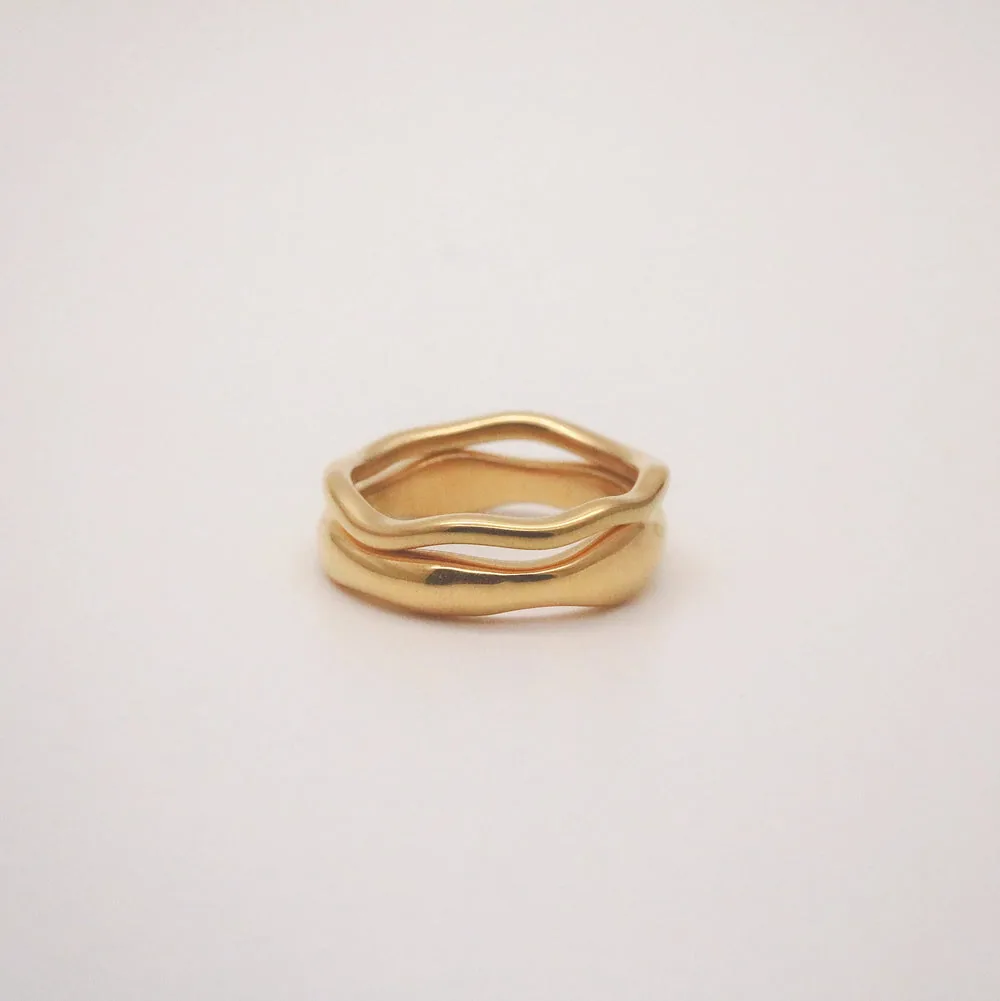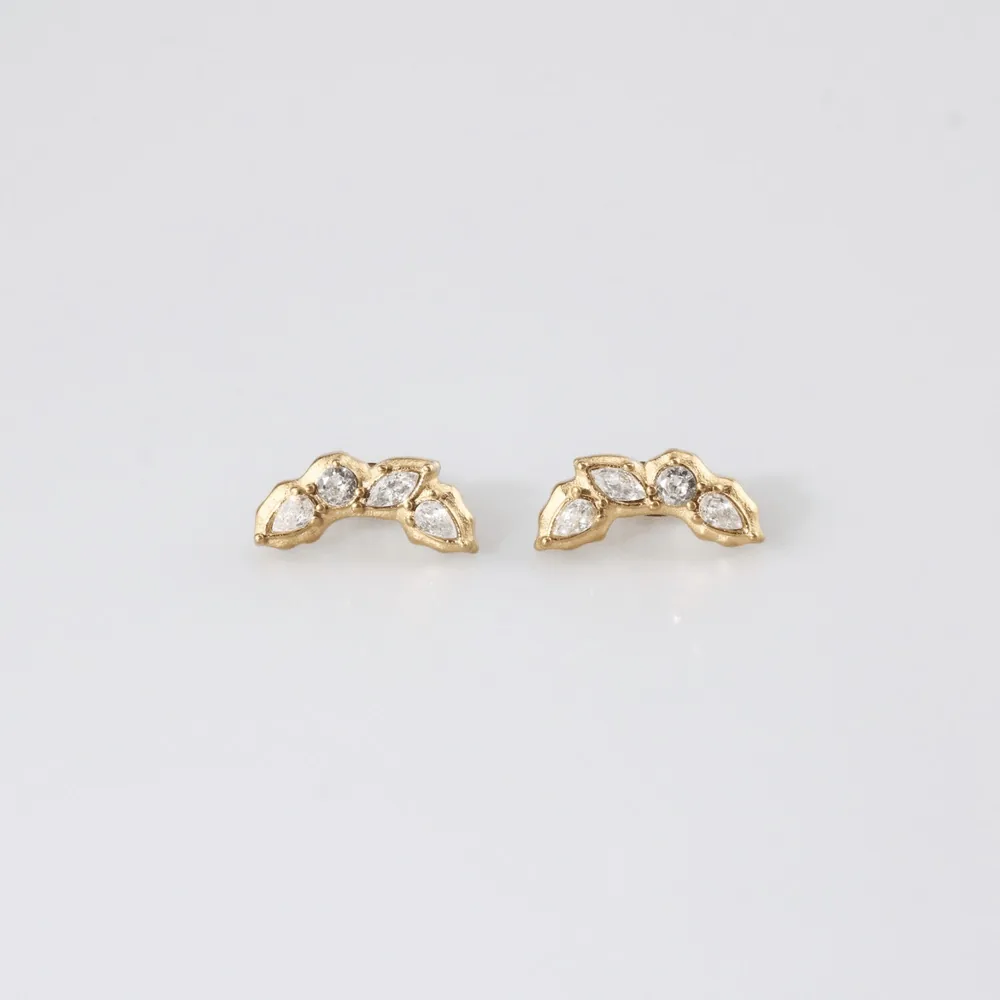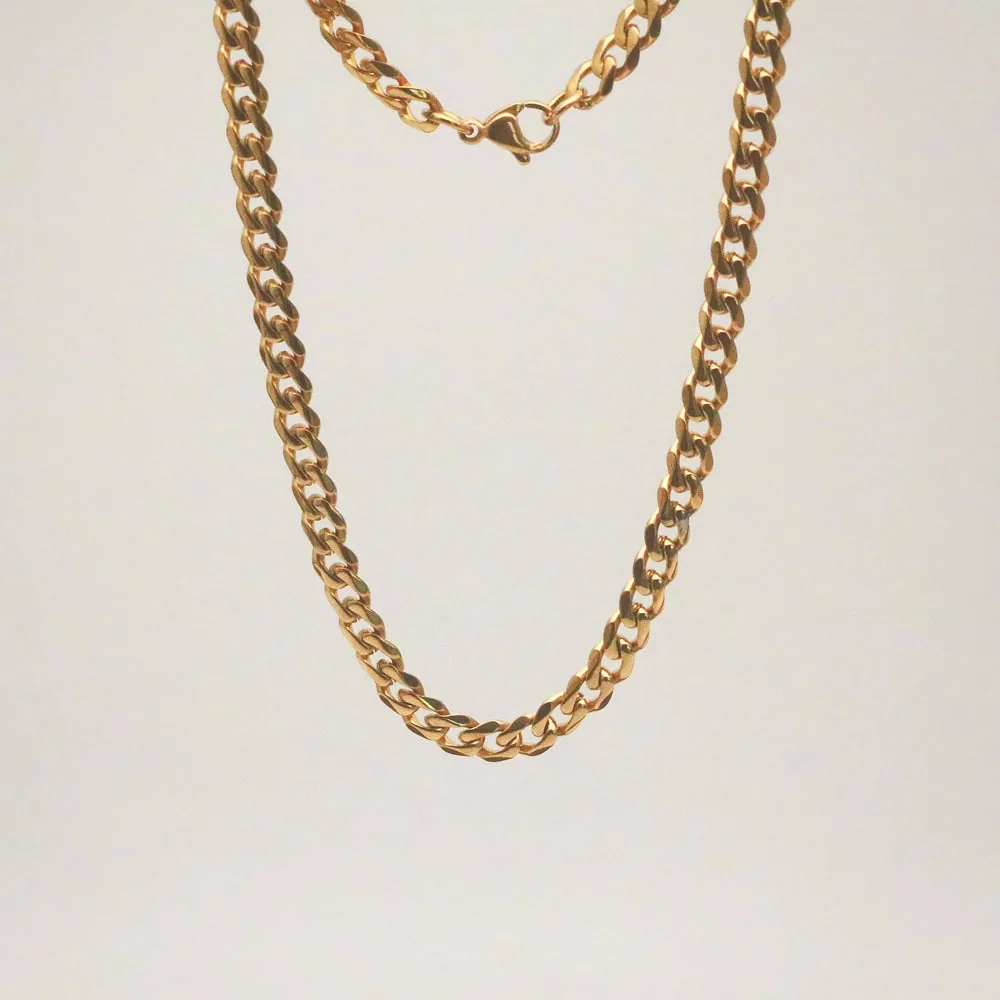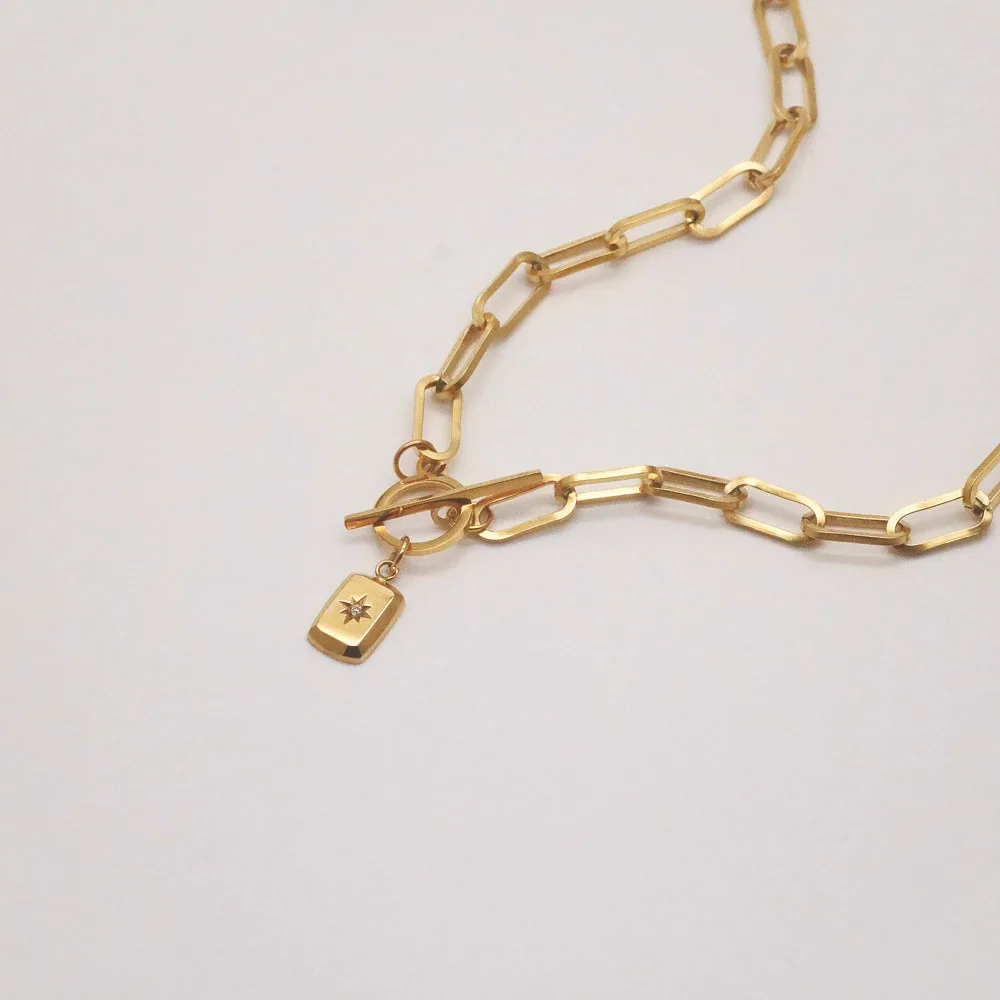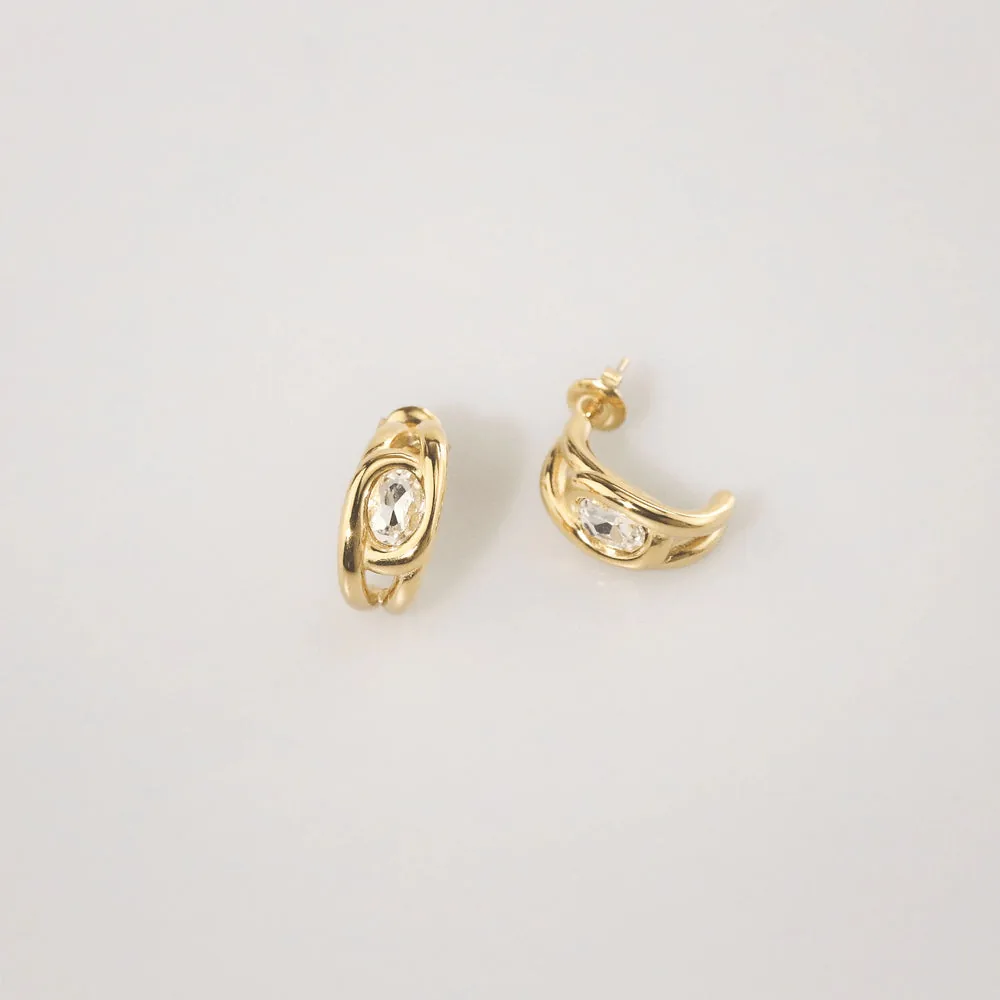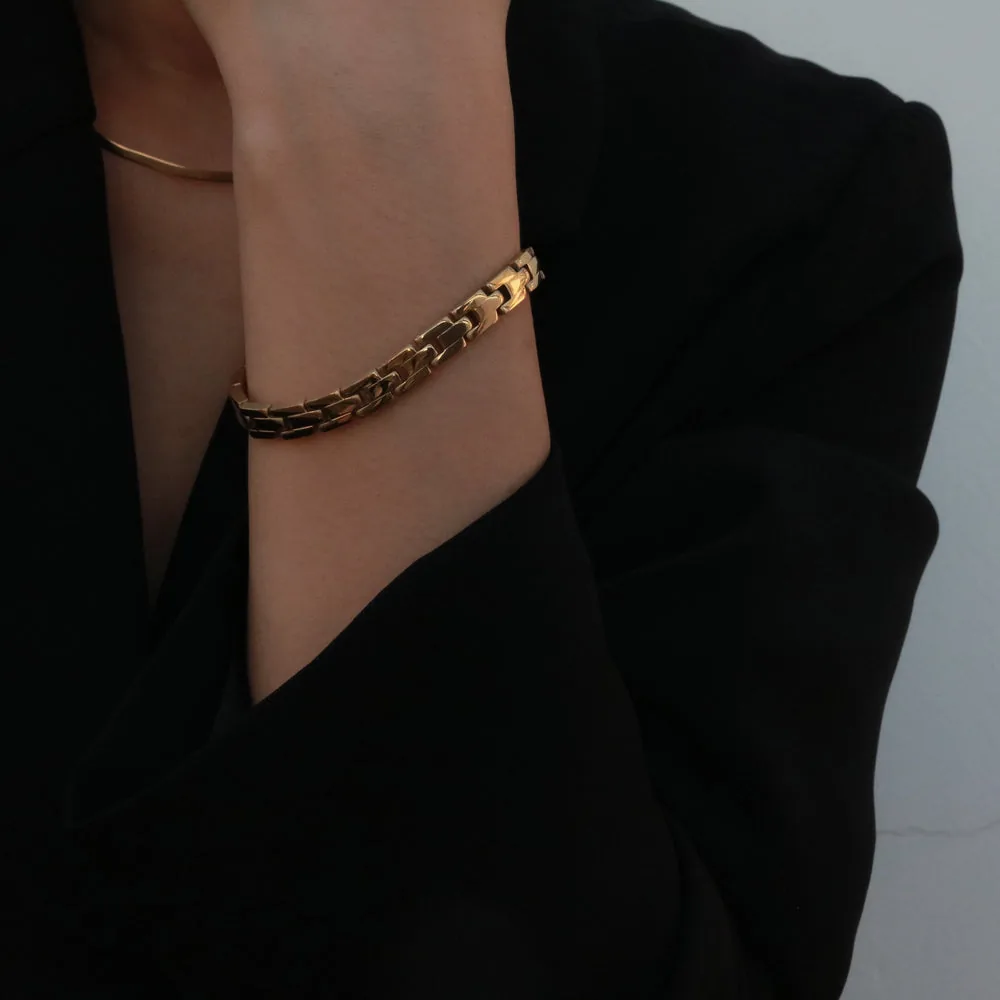
If you buy stainless steel jewelry wholesale, the word "stainless" on an invoice tells you almost nothing. There are dozens of stainless grades, and the cheap end of the market tarnishes, sheds its plating, and lands back on your counter as a return. The grade that actually behaves the way your customers expect — and the one this whole catalog is built on — is 316L. This guide explains what 316L is, why it holds gold plating and resists corrosion, why that translates into fewer returns for your boutique, and exactly what to check on a supplier's spec sheet so you can tell real 316L from a generic "stainless" label.
Key takeaways
- 316L is marine/surgical-grade for a reason: its ~2–3% molybdenum content resists chloride pitting from sweat, showers, and pools, and the low-carbon ("L") chemistry resists corrosion at welds and joints.
- It holds plating better than brass: a dense, stable, non-porous steel surface gives the gold layer a stronger bond, so an 18k-gold-plated 316L piece keeps its color far longer than gold-over-brass.
- Durability is a margin lever: a corrosion-resistant, nickel-safe core means fewer "it turned green / my skin reacted" returns, which protects the markup you build on every piece.
What 316L stainless steel actually is
316L is an austenitic stainless steel alloyed with chromium (roughly 16–18%), nickel (about 10–12%), and crucially molybdenum at around 2–3%, per the published SAE 316L composition. That molybdenum is the whole story. It is the element that lets 316 and 316L resist localized "pitting" and crevice corrosion from chlorides — salt water, chlorinated pools, and the chloride in human sweat. The grade without molybdenum, 304, performs fine indoors and in fresh water but does not hold up to salt and chloride the way 316 does, which is why 316/316L is the standard marine-grade stainless and why subtypes of 316 are used as surgical stainless steel.
The "L" means low carbon. Lower carbon content improves corrosion resistance, especially at the joins and welds where a bracelet clasp or an earring post is attached — the spots that fail first on cheaper jewelry. For a boutique buyer the takeaway is simple: 316L is the grade that was designed to live against skin and water, not the grade that was cheapest to stamp.
Why 316L holds gold plating (and brass doesn't)
The metal underneath your gold matters more than most buyers realize. A base metal's job is to be a stable, non-porous surface the plating can bond to. Stainless steel gives you a dense, chemically stable, non-porous substrate, so the gold layer bonds harder and survives daily friction, sweat, and water far better than gold over brass or copper, which can tarnish from the inside as the base metal reacts with air and skin oils (see this plated-brass vs plated-stainless comparison).
To be clear about what you are reselling: the Couture's Corner line is 18k-gold-plated 316L stainless steel — plated, not solid gold and not vermeil. Plating is a real gold layer applied over the steel core; it is not the same thing as vermeil, which the FTC 16 CFR Part 23 defines specifically as 10k+ gold at least 2.5 microns thick over a base of sterling silver. If you sell across plated, vermeil, and solid tiers, our companion guide on gold-plated vs vermeil vs solid gold for stockists breaks down how to describe each one honestly on a tag. The honest pitch to your customer is that the 316L core is what makes the color last — the plating still wears over years of wear, which is why every Couture's Corner piece is backed by a 1-Year Color Warranty.
Why 316L sells in a boutique: durability is a return-rate story
Jewelry returns are rarely about taste. They are about a piece that turned a finger green, a post that irritated an ear, or a clasp that corroded after a summer of pool days. A 316L core answers all three. The corrosion resistance is what makes the "waterproof" claim defensible — the steel core shrugs off showers, sweat, and pools, even though the plating on top is still a finite layer that wears over time. We unpack exactly what "waterproof" can and cannot mean on a tag in our waterproof jewelry wholesale guide, because over-promising is itself a return generator.
There is also a skin-safety angle that matters for repeat business. In the EU, the EN 1811 nickel-release standard caps how much nickel a piece may release: 0.5 µg/cm²/week for items in prolonged skin contact and a tighter 0.2 µg/cm²/week for posts that go into a piercing. A well-made 316L piece releases very little nickel because it is locked into a stable alloy, which is the basis for an honest "hypoallergenic" claim — meaning nickel-safe for most wearers, not "nickel-free." That is why surgical-grade 316 is a common choice for body piercings in the first place. For your floor, fewer reactions on earrings and rings means fewer returns and more re-orders. Browse the bracelets category or the full line to see how the same 316L core runs through every style.
What to check on a supplier's spec sheet
"Stainless steel" on a line sheet is a marketing word until the spec backs it up. Before you commit an order, confirm these. If a supplier can't answer them in writing, treat the word "stainless" as unverified.
| What to ask for | Good answer (real 316L) | Red flag (generic "stainless") |
|---|---|---|
| Stated grade | Specifically "316L" core, named on the spec | "Stainless," "titanium steel," or no grade given |
| Molybdenum content | ~2–3% Mo (the chloride/pitting defense) | Unknown, or a 304-type alloy with no Mo |
| Plating description | "18k gold-plated" — honest plating language | "Solid gold" or "vermeil" on a steel core (false) |
| Nickel safety | Nickel-safe / EN 1811-aligned, framed as hypoallergenic | "Nickel-free" with no test basis |
| Warranty | A written color/finish warranty (ours is 1 year) | No coverage; all wear risk sits with you |
This same checklist works whether you're sourcing wholesale stainless steel earrings, sourcing stainless steel jewellery wholesale in the UK, or building a first stainless order from a US supplier. The grade is the constant; the marketing language around it is what varies. For the bigger picture of how stainless fits a boutique assortment alongside terms, MOQs, and pricing, start with our pillar on wholesale jewelry for boutiques.
Stainless steel jewelry wholesale: FAQ
316L is a low-carbon, molybdenum-bearing austenitic grade (around 2–3% molybdenum) that resists chloride pitting from sweat, showers, and pools. Generic "stainless," often a 304-type alloy without molybdenum, is fine indoors but corrodes faster in salt and chloride, so it tarnishes and loses plating sooner.
A well-made 316L piece locks nickel into a stable alloy and releases very little, which supports an honest "hypoallergenic," nickel-safe claim under the EU EN 1811 standard (0.5 µg/cm²/week for skin contact, 0.2 for piercing posts). It is not "nickel-free," so describe it as nickel-safe for most wearers rather than zero-nickel.
Yes. Stainless steel gives the gold a dense, stable, non-porous surface to bond to, so 18k-gold-plated 316L holds its color through friction, sweat, and water far better than gold over brass, which can tarnish from the base metal underneath. The plating is still a finite layer that wears over years.
You can honestly say the 316L core resists corrosion from showers, sweat, and pools, which is what "waterproof" means in this category. Avoid implying the gold plating is permanent — the plating wears over time even though the steel core does not corrode. Pairing the claim with a color warranty keeps it credible and reduces returns.
Couture's Corner runs a $100 minimum order with NET-60 terms at 0% interest, and your first order ships with free returns. Stock ships from a US (Colorado) warehouse in roughly 15 business days, so you can test a stainless assortment on your floor with limited downside.
Open a Couture's Corner wholesale account
Every piece in the full line is built on an 18k-gold-plated 316L core, from the Aleah watch-band bracelet to the everyday mini sun hoops and the adjustable rose signet ring. $100 minimum · NET-60 terms · first order ships with free returns.
Open a wholesale account →