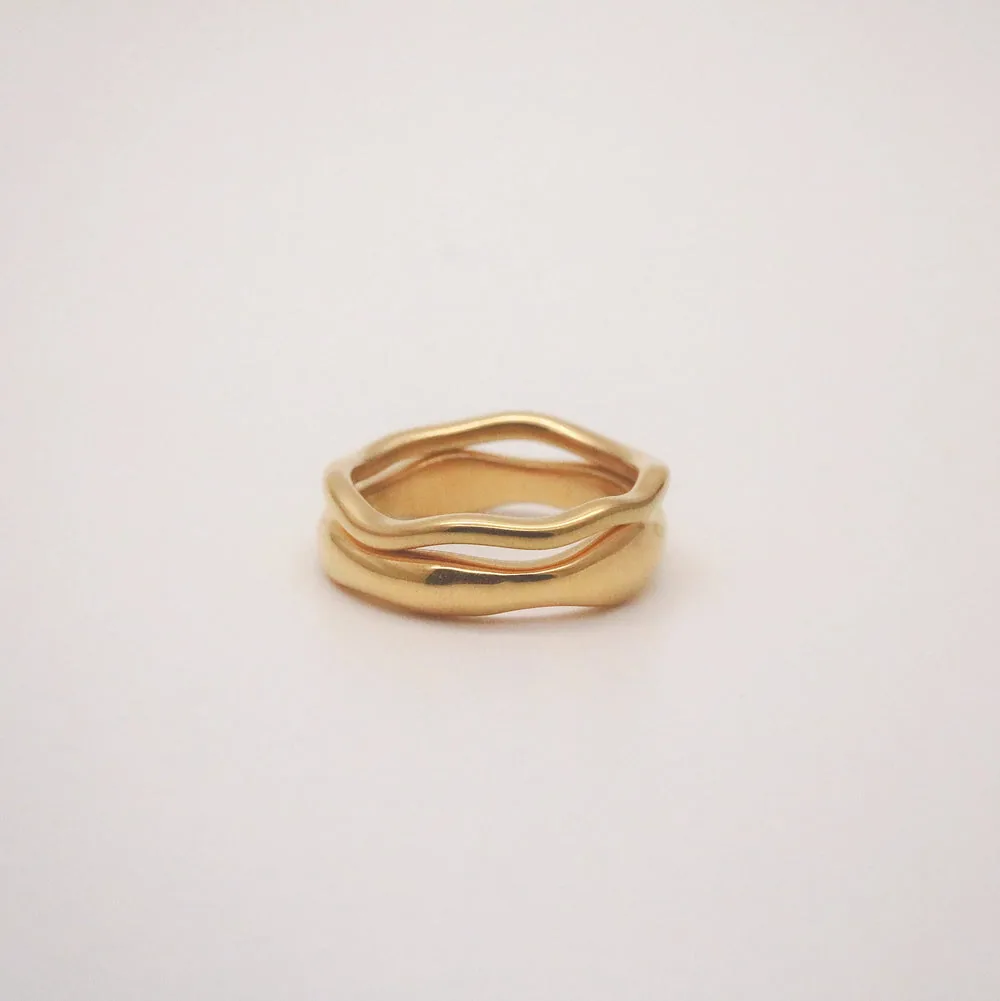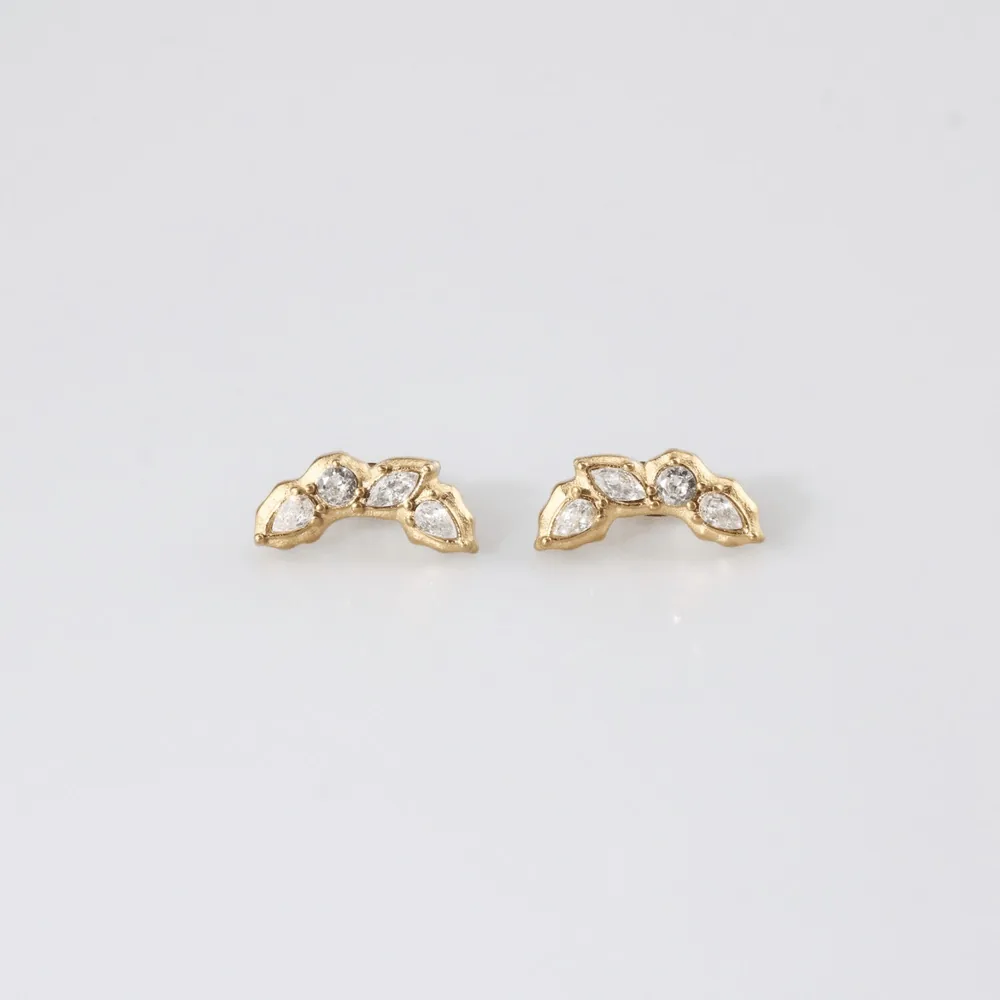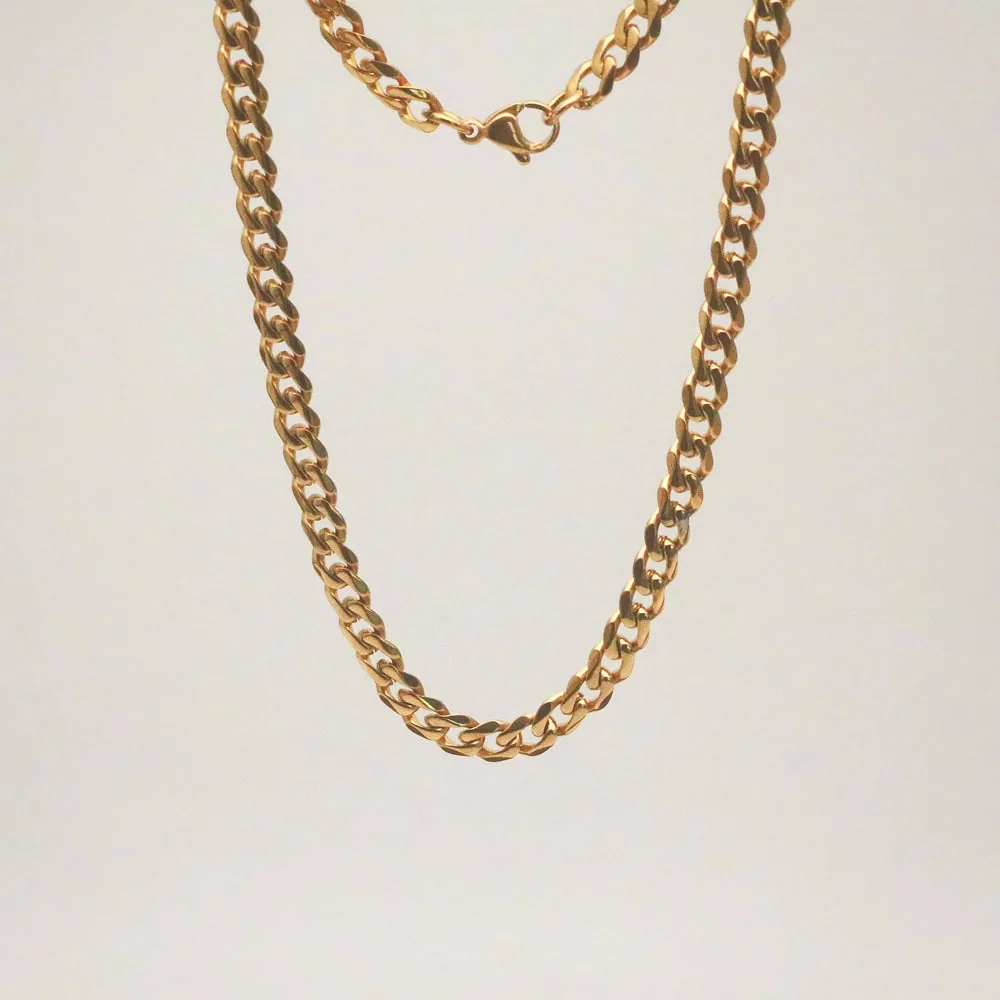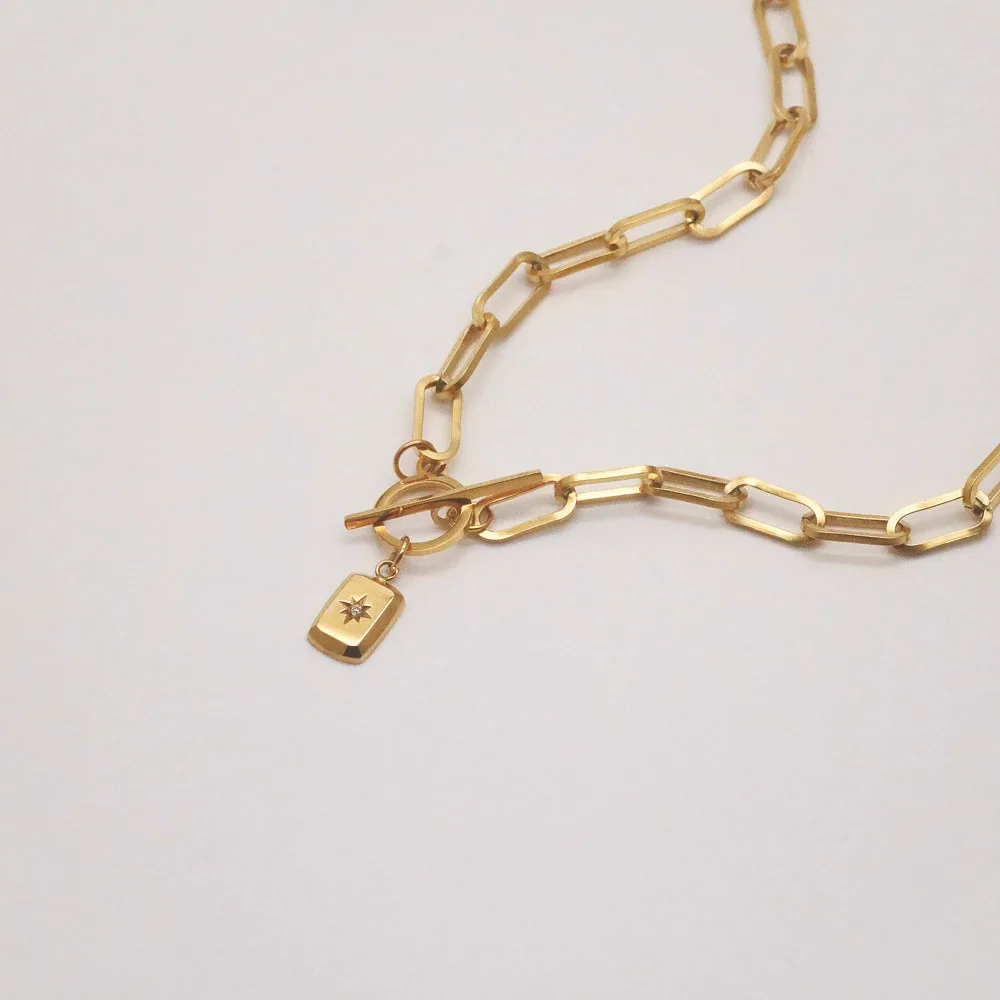
When you're sourcing gold-tone jewelry to resell, the words on a supplier's line sheet are doing a lot of quiet work — and not all of them mean what a shopper assumes. "Gold-plated," "vermeil," "gold-filled" and "solid gold" are not vibes; in the U.S. they're regulated terms with specific thresholds. Get them wrong on your own product page and you've set a customer up to feel misled when the piece behaves like what it actually is. This guide breaks down what each tier legally means, what it costs you at wholesale, and the honest one-line description to put in front of your buyer for each.
Key takeaways
- The four tiers are legally distinct. "Gold-plated" needs only a thin gold layer over any base metal; "vermeil" requires a thicker layer over sterling silver specifically; "gold-filled" is a mechanically bonded layer that's at least 1/20 of the article's weight; "solid gold" is gold alloy throughout.
- Each tier prices for a different shelf. Plated demi-fine fashion lands at fashion-jewelry margins; vermeil and gold-filled cost more at wholesale; solid gold is a different business entirely.
- Honesty is the durable strategy. Couture's Corner pieces are 18k-gold-plated 316L stainless steel — plated, not vermeil, not solid — and describing them exactly that way is what keeps them off your returns shelf.
What each term legally means
In the United States, the FTC Jewelry Guides (16 CFR Part 23) set the meaning of the words you'll see on a wholesale line sheet. They exist precisely so a shopper isn't misled about how much gold is actually on a piece. The four tiers you're choosing between break down like this:
| Tier | How the gold is applied | Legal threshold (FTC) | Base under the gold |
|---|---|---|---|
| Gold-plated (electroplate) | Electroplated gold layer | At least 0.175 micron of 10k-or-finer gold. "Heavy gold electroplate" = at least 2.5 microns. | Any base metal (often brass; or, better, stainless steel) |
| Vermeil | Gold layer over silver | 10k-or-finer gold, at least 2.5 microns thick | Sterling silver only — that base is part of the definition |
| Gold-filled (rolled gold plate) | Gold layer mechanically bonded under heat/pressure | Gold layer must be at least 1/20 (5%) of the article's total weight, and the karat must precede the term (e.g. "14/20") | A base metal, usually jeweler's brass |
| Solid gold (e.g. 14k) | Gold alloy all the way through | Stated by karat (24k = pure; 14k = 58.3% gold) | None — it's gold throughout |
Two things to notice. First, "vermeil" and "gold-filled" both have a karat-and-thickness floor that plain "gold-plated" does not, which is why they sit higher in price. Second, the difference between "gold-plated" and "gold-filled" is the bonding method and the quantity of gold: a plated layer is measured in microns; a gold-filled layer is measured as a fraction of the whole piece's weight — roughly 100 times more gold than typical plating, which is why genuine gold-filled costs accordingly. If you want the deeper material side of why a steel core changes how plating wears, our companion guide on stainless steel jewelry wholesale covers it.
Where Couture's Corner honestly sits
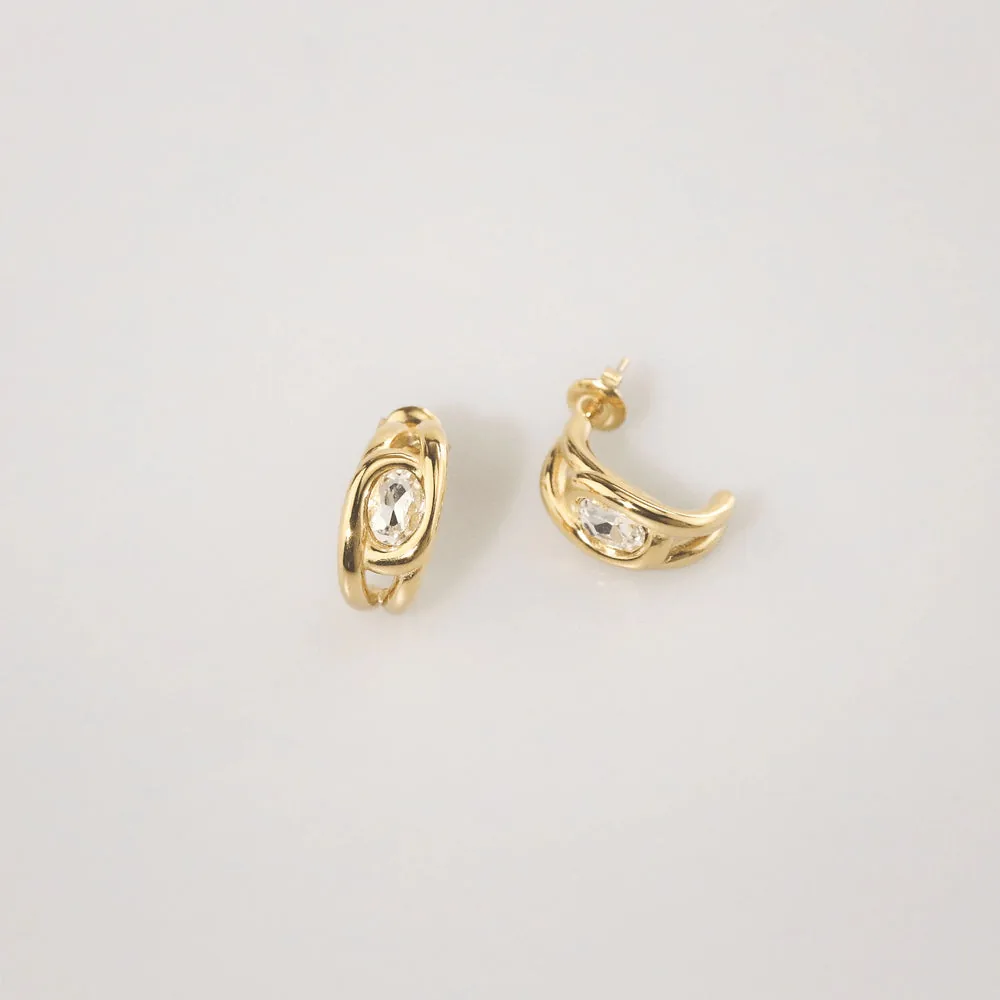
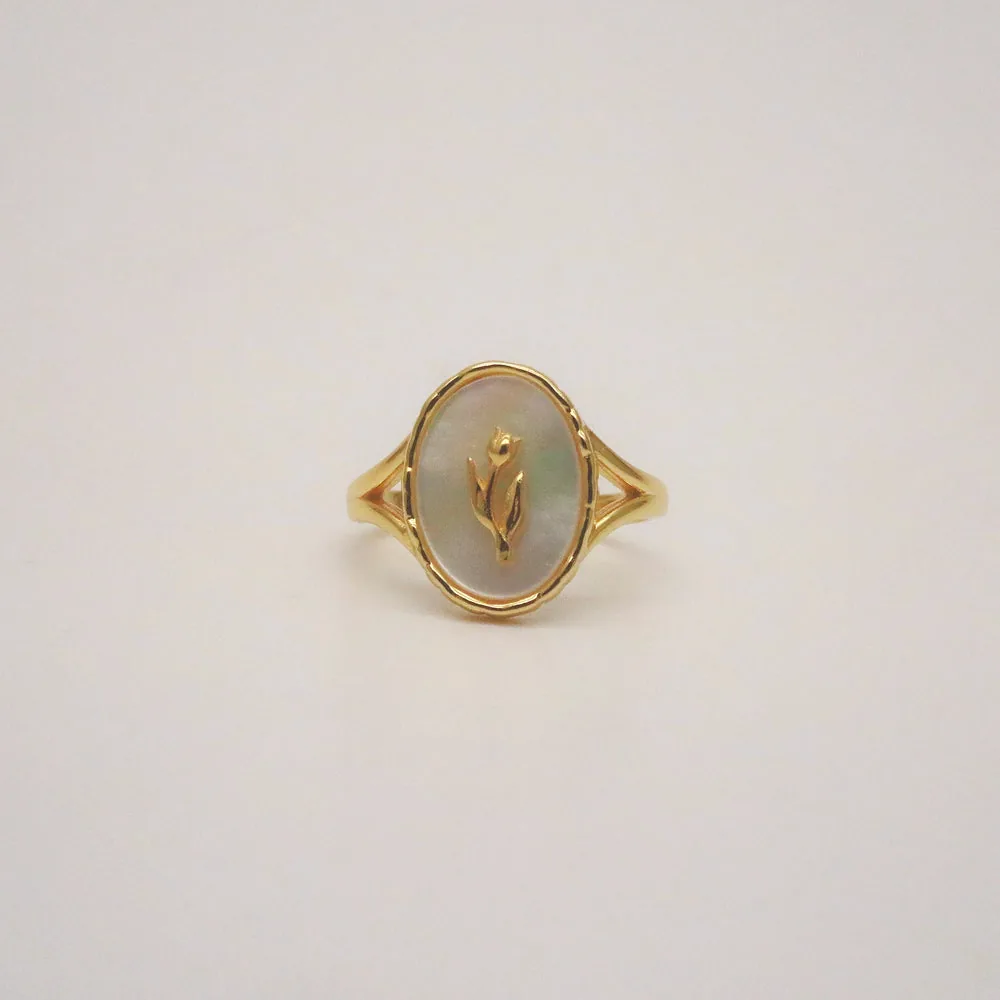
Our line is 18k-gold-plated 316L stainless steel. Read against the table above, that places it squarely in the gold-plated tier — it is plated, not vermeil (no sterling-silver base) and not solid gold (the core is steel, not gold throughout). We say that plainly because pretending otherwise only backfires at your counter. What the 316L core buys you is real, though: it's a corrosion-resistant, low-nickel-release alloy, so the pieces are "waterproof" in the practical sense — they shrug off showers, sweat and pools — and nickel-safe for sensitive skin. The honest caveat is the same for any plating on earth: the gold layer wears over years of daily wear, which is why every piece carries a 1-Year Color Warranty. "Plated over surgical-grade steel, waterproof core, warrantied color" is a stronger, more defensible pitch than a vague "gold" that a shopper will eventually test against the truth.
That's the wedge for a stockist: you're not competing on a false promise of solid gold, you're competing on a piece that does what you told the customer it would. A 14k-look rose signet ring at a fashion price reorders; a "solid gold" claim that flakes does not.
How each tier prices for a boutique
The tier you stock decides which shelf — and which margin — the piece lives on. Markup conventions are well established: keystone (retail = 2× wholesale, a 100% markup) is the traditional default; fashion jewelry often carries 3–4× because unit costs are low and impulse pricing supports it; demi-fine and fine pieces typically run a tighter 2–2.5× landed cost. Here's how the four tiers tend to behave on a boutique's floor:
| Tier | Relative wholesale cost | Typical retail markup | What you're really selling |
|---|---|---|---|
| Gold-plated 316L | Lowest — fashion / demi-fine entry | ~2.2–3× landed cost | Everyday gold look, waterproof core, warrantied — the reorder engine |
| Vermeil | Higher (silver core + thick plating) | ~2–2.5× | A premium "almost-fine" story; priced like it, sells slower |
| Gold-filled | Higher (significant real gold by weight) | ~2–2.5× | Durability buyers; a niche, not your volume driver |
| Solid gold | Highest — tracks the gold spot price | ~2× (keystone) or less | Fine-jewelry investment; different inventory math entirely |
For most boutiques, plated 316L is the open-to-buy workhorse: low enough unit cost to carry a fashion markup, durable enough to keep returns down, and broad enough to fill a wall. The other tiers are accents, not the core of the floor. If you want to run those markups against packaging, payment fees and returns properly, our guide to pricing wholesale jewelry walks through the full landed-cost math — and the wider sourcing picture lives in our pillar on wholesale jewelry for boutiques.
What to honestly tell your customers
The single most useful habit a stockist can build is matching the word to the product. Here's the plain-English script for each tier — copy it onto your product pages and you'll never overstate:
- Gold-plated (our line): "18k-gold-plated stainless steel — the gold tone is plated over a waterproof, nickel-safe steel core, and it's backed by a 1-year color warranty." Honest, specific, and it tells the buyer how to care for it.
- Vermeil: "A thick gold layer over a solid sterling-silver core." Don't apply this word to a steel-core piece — the silver base is part of the legal definition.
- Gold-filled: "A bonded gold layer that's at least 1/20 of the piece by weight — far more gold than plating." Only use it if the supplier can document the fraction and karat.
- Solid gold: Reserve it for pieces that are gold alloy throughout, stated by karat. Never apply it to anything plated — that's the line that gets a brand into trouble.
Stock a core of stackable rings and dainty pendants described this exactly, and your customers learn they can trust your labels — which is the whole game in resale.
Gold-plated vs vermeil vs solid gold: stockist FAQ
No. Gold-plated means an electroplated gold layer of at least 0.175 micron over a base metal, while gold-filled means a gold layer mechanically bonded under heat and pressure that makes up at least 1/20 (5%) of the article's total weight — roughly a hundred times more gold. Gold-filled costs and lasts more accordingly, and the FTC requires the karat to precede the term, as in "14/20 gold-filled."
No. Under the FTC Jewelry Guides, vermeil requires a base of sterling silver specifically, plated with 10k-or-finer gold at least 2.5 microns thick. A gold-plated stainless-steel piece is not vermeil no matter how thick the plating, because the base metal is wrong. Calling a steel-core item "vermeil" on a line sheet is a misuse of the term and a red flag in a supplier.
Our line is 18k-gold-plated 316L stainless steel, which puts it in the gold-plated tier. It is plated, not vermeil (there's no sterling-silver base) and not solid gold (the core is steel). The 316L core is corrosion-resistant and low-nickel-release, so the pieces are waterproof and hypoallergenic in practical use, and a 1-Year Color Warranty covers the plating.
Gold-plated 316L typically delivers the strongest margin because the unit cost is low enough to support a fashion-jewelry markup of roughly 2.2 to 3 times landed cost while still pricing for repeat purchase. Vermeil, gold-filled and solid gold carry higher wholesale costs and usually run tighter 2 to 2.5 times markups, so they work better as accent pieces than as your volume floor.
The 316L stainless-steel core resists corrosion, so it won't rust from water or sweat, but the gold plating itself — like any plating — will gradually wear with years of daily contact and friction. That is true of every plated piece on the market. It's why honest suppliers state it plainly and back the finish with a warranty rather than implying the gold lasts forever.
Open a Couture's Corner wholesale account
Stock 18k-gold-plated 316L that's described the way it actually is — browse the full line or start with hero pieces like the rose signet ring, the starburst pendant necklace, or the emerald gem jewelry set. $100 minimum · NET-60 terms · first order ships with free returns.
Open a wholesale account →