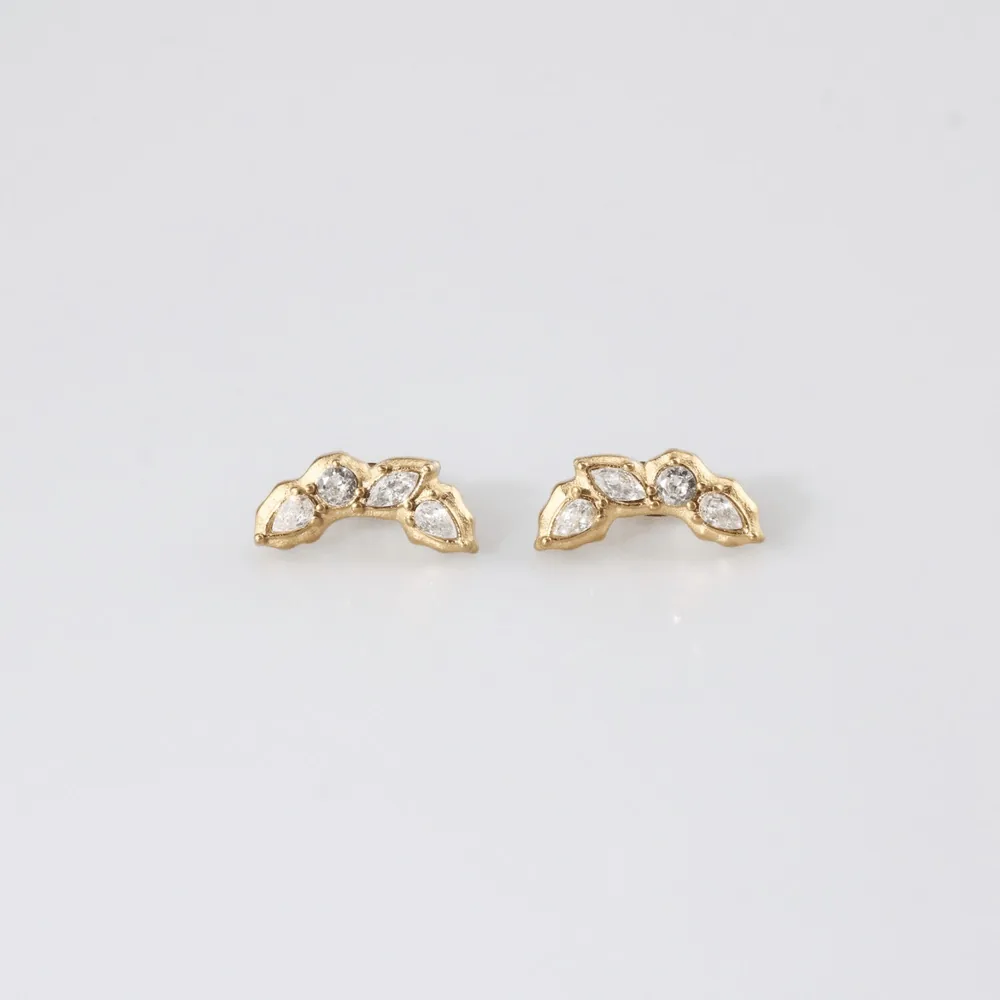
When a boutique buyer searches for wholesale stainless steel earrings, the real question underneath is almost always the same: which earrings can I put behind a counter without fielding "they made my ears itch" returns three weeks later? Earrings are the most skin-intimate piece you stock — a post sits inside a healed piercing for ten hours a day — so the base metal matters more here than on any bracelet or necklace. This guide is the material answer: why a 316L stainless-steel core is the base that drives stud reorders, what the EN 1811 nickel-release standard actually permits you to claim, and how to vet an earring supplier before you commit. (For the shape side of the assortment — building a hoop and huggie wall — see our sibling hoop & huggie earrings guide; this one is about the metal and the studs.)
Key takeaways
- 316L is the "sensitive ears" base: a low-carbon, surgical/marine-grade steel that releases very little nickel, which is what makes an honest hypoallergenic claim defensible — nickel-safe, not nickel-free.
- Studs are your velocity SKU: they are the everyday-wear and gift core of an earring wall, so they reorder faster than statement pieces and carry the assortment between trends.
- The metal is a return-rate lever: a corrosion-resistant 316L core survives showers and sweat, but the 18k plating on top still wears over years — say that plainly and the 1-Year Color Warranty does the rest.
Why 316L is the base metal that matters for earrings
316L is a low-carbon austenitic stainless steel — the "L" is the low-carbon chemistry, and the grade is alloyed with chromium, nickel, and around 2–3% molybdenum. That molybdenum is why 316/316L is the standard marine-grade stainless and why subtypes are used as surgical stainless steel: it resists the chloride pitting that comes from sweat, showers, and pools. For an earring post that lives against a damp piercing channel, that corrosion resistance is not a luxury spec — it is the difference between a post that stays clean and one that irritates.
The reason this matters commercially is that earrings fail differently from other jewelry. A bracelet that tarnishes is a cosmetic complaint; an earring that reacts is a comfort-and-safety complaint, and those come back to your counter faster and angrier. Standardizing your earring wall on a 316L core takes the most common reaction trigger off the table before it reaches the customer's skin. For the broader case on why we built the whole catalog on this one grade — clasps, posts, and all — see our deeper stainless steel jewelry wholesale explainer.
"Sensitive ears," nickel-safe, and what EN 1811 actually lets you claim
Nickel allergy is the single biggest driver of earring returns, and it is also where the most over-claiming happens. Be precise, because precision is what protects you. The EU's nickel-release standard, EN 1811, does not require zero nickel — it caps how much nickel a piece may release: 0.5 µg/cm²/week for items in prolonged skin contact and a tighter 0.2 µg/cm²/week for posts that go into a piercing. A well-made 316L piece passes comfortably because the nickel is locked into a stable alloy and barely migrates out.
That is exactly why surgical-grade steel is a default choice for fresh piercings in the first place, and it is the honest basis for the claim your "sensitive ears" customer is shopping for. Train your floor staff to say nickel-safe or low nickel release — not "nickel-free." The distinction sounds like splitting hairs until a customer with a documented allergy reacts to a piece you labeled "nickel-free," and then it is a credibility problem, not a wording problem. The US FTC's 16 CFR Part 23 jewelry guides take the same posture toward composition claims generally: describe what the metal is, not what you wish it were. Buyers who source for clients with metal sensitivities reorder from the supplier whose claims hold up — that reliability is the repeat business.
Why studs are the velocity engine of an earring wall
If hoops and huggies are the style statement, studs are the cash register. A stud is the lowest-friction earring purchase a shopper makes: it is the everyday default, the second-piercing filler, the safe gift when someone doesn't know the recipient's taste, and the first earring a newly-healed lobe goes back to. That breadth of occasion is why studs turn over faster than any other earring shape and why they carry an assortment between trends instead of riding one.
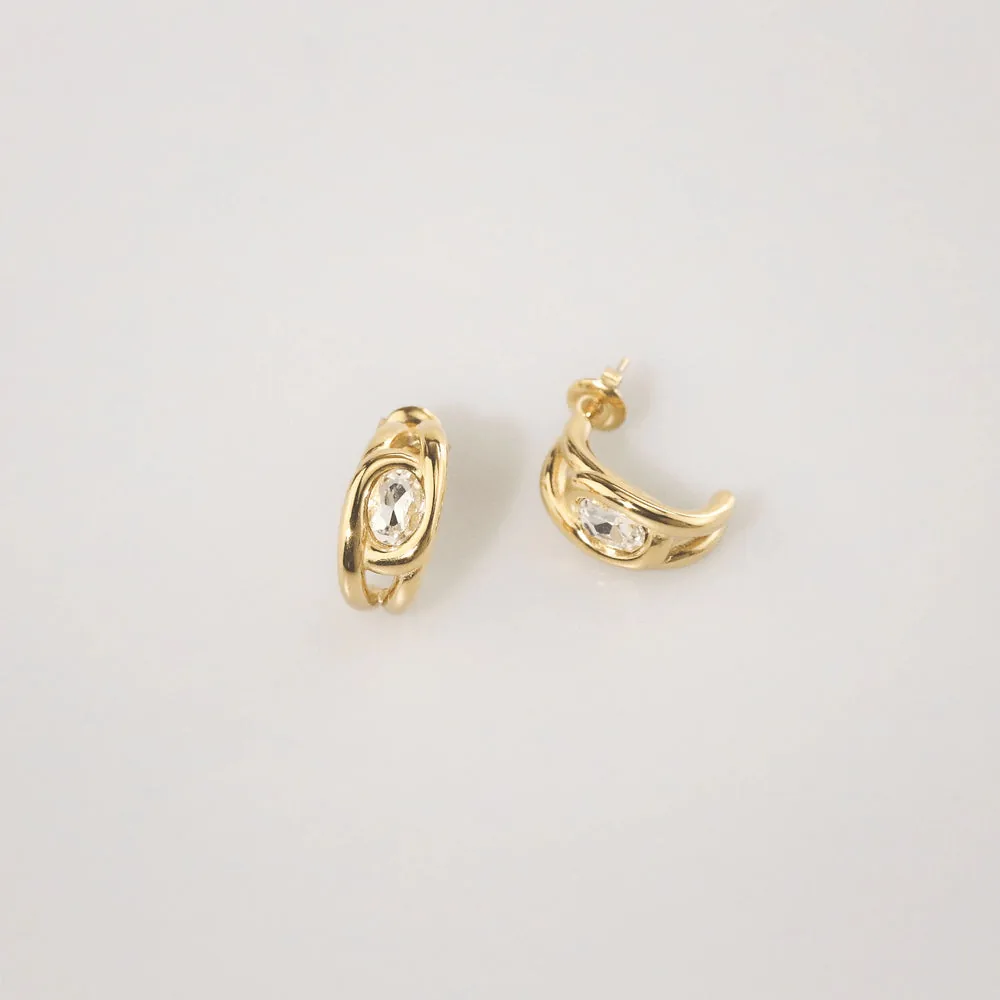
For a boutique, that translates into a stocking rule of thumb: let studs be the deep, always-on base of the earring wall and let hoops, drops, and dangles be the rotating interest on top. A classic gold-plated stud like the 18k Gold Plated Waterproof Stud Earrings is the kind of SKU you reorder on a schedule rather than a whim; a more decorated stud such as the Royal Medallion Stud Earrings gives you a giftable step-up at the same post-comfort. When you want movement and sparkle, a CZ drop like the Afton Teardrop CZ Earrings — cubic zirconia, a simulated stone, not a diamond — or the Gold Teardrop Dangle Earrings extends the same 316L core into statement territory. Every one of these is genuinely a stainless-steel-core piece, so the comfort story is consistent across the whole wall. Browse the earrings category to see the studs-to-statement spread in one place.
316L vs sterling silver vs brass: the earring sourcing table
Most "stainless steel earrings" you'll be quoted sit in one of three base-metal camps, and the camp determines your return rate, your price position, and how often the SKU comes back to be reordered. Here is how they line up for an earring program specifically.
| Earring base | Nickel / skin | Water / tarnish | Price position | Reorder note |
|---|---|---|---|---|
| 316L stainless (gold-plated) | Low nickel release, nickel-safe for most wearers (EN 1811 basis) | Core resists corrosion through showers, sweat, pools; plating wears over years | Accessible everyday tier; strong keystone margin | Fast, predictable — the velocity base of the wall |
| Sterling silver | Generally well tolerated; nickel depends on the specific alloy | Tarnishes with air/sweat; needs polishing and care messaging | Higher cost tier; metal price moves with the market | Slower; a "fine" anchor, not a volume driver |
| Brass / mixed alloy (gold-plated) | Variable nickel; higher reaction risk on posts | Can tarnish from the base up; plating bonds less durably | Cheapest unit cost up front | Reorders masked by returns — the hidden-cost option |
The trap in that table is the bottom row: brass quotes the lowest landed cost, so it looks like the margin play, but earring posts are exactly where a cheap alloy gets punished, and the returns quietly eat the spread. A 316L earring program typically lands in a realistic wholesale band of about $45–$48 per pair, which is an accessible everyday price that still leaves you keystone-style room on a retail tag — without the reaction-return drag. For a full read on how earrings should sit inside a priced, terms-aware assortment, see our pillar on wholesale jewelry for boutiques.
The "waterproof" line you can actually defend
Earrings get worn in the shower more than any other category — people simply forget to take studs out — so "waterproof" sells. Keep the claim honest and it keeps protecting you: the 316L core resists corrosion through showers, sweat, and pools, so the steel won't rust or pit. What is not permanent is the 18k gold plating on top, which is a real but finite gold layer that wears gradually over years of daily wear. Say "the steel won't corrode; the color wears slowly over time," pair it with the 1-Year Color Warranty, and you convert what could be a complaint into a reason the customer trusts the next purchase. We unpack the full do's-and-don'ts of this claim in the waterproof jewelry wholesale guide.
More wholesale guides
- Wholesale jewelry for boutiques — the pillar: terms, MOQ, and building an assortment.
- Wholesale hoop & huggie earrings — the sibling shape guide to this material guide.
- Stainless steel jewelry wholesale — the full 316L material case across every category.
- Waterproof jewelry wholesale — how to claim "waterproof" without over-promising.
Wholesale stainless steel earrings: FAQ
A well-made 316L post locks nickel into a stable alloy and releases very little, which supports an honest hypoallergenic claim under the EU EN 1811 standard (0.2 µg/cm²/week for piercing posts). Describe them as nickel-safe or low nickel release for most wearers — not "nickel-free," which is a different and stronger claim you cannot back.
Studs are the lowest-friction earring purchase: they are the everyday default, the second-piercing filler, and the safe gift. That breadth of occasion means they turn over independent of trends, so they form the deep, always-on base of an earring wall while hoops and drops rotate as the interest on top.
You can honestly say the 316L core resists corrosion from showers, sweat, and pools, so the steel will not rust or pit. Avoid implying the gold plating is permanent — the 18k plating is a finite layer that wears gradually over years even though the core does not corrode. Pairing the claim with a color warranty keeps it credible.
No. The sparkle on pieces like the Afton teardrop earrings is cubic zirconia (CZ), a simulated stone, not a diamond. Label it as cubic zirconia or simulated on your tags. Being upfront about CZ at the everyday price point builds the same trust that keeps sensitive-ears customers reordering the studs.
Couture's Corner runs a $100 minimum order with NET-60 terms at 0% interest, and your first wholesale order ships with free returns. Stock ships from a US warehouse in Colorado in roughly 15 business days, and there is no per-style minimum, so you can test a studs-led earring assortment with limited downside.
Brass quotes a lower unit cost, but earring posts are where cheap alloy gets punished — higher reaction risk and tarnish drive returns that quietly eat the spread. A 316L program lands around a $45–$48 wholesale band, an accessible everyday price that still leaves keystone-style room without the reaction-return drag.
Open a Couture's Corner wholesale account
Browse the full line or start your earring wall with the everyday 18k Gold Plated Waterproof Stud Earrings and the giftable Royal Medallion Stud Earrings — both on a nickel-safe 316L core. $100 minimum · NET-60 terms · first order ships with free returns.
Open a wholesale account →