Most people who want to open a jewelry boutique get stuck in the same place: a Pinterest board full of beautiful pieces, and no idea how to turn it into a real store that pays for itself. The pretty part is easy. The hard part is the order you do things in, how much cash you actually need to start, and how to buy inventory that sells through instead of sitting in a drawer. This guide walks you through how to start a jewelry boutique the way I'd coach a friend through it — concept, budget, the unglamorous legal steps, how to source, and how to build a first assortment that reorders. No fluff, just the moves that matter.
Key takeaways
- Pick a clear niche and price position first. Demi-fine 18k-gold-plated pieces are the sweet spot for a new boutique — affordable, honest, fast to reorder, and low risk per unit.
- Low-minimum wholesale is the lowest-risk way to start. You own your stock and keep the margin, without the deep cash commitment of a big opening buy.
- Buy the core deep, statement pieces shallow. Studs, hoops, dainty necklaces and stacker rings pay your rent; statement pieces add personality but tie up open-to-buy.
Step 1: Pick a concept, niche & price position
Before you buy a single piece, decide who you're for and where you sit on price. "A jewelry store for women" is not a concept — it's a wish. A concept is sharper: everyday gold-tone jewelry for the customer who showers and sweats in it and wants it to last, or giftable demi-fine pieces under $60 for a college town. The tighter your concept, the easier every later decision becomes — what to stock, how to merchandise, who to market to.
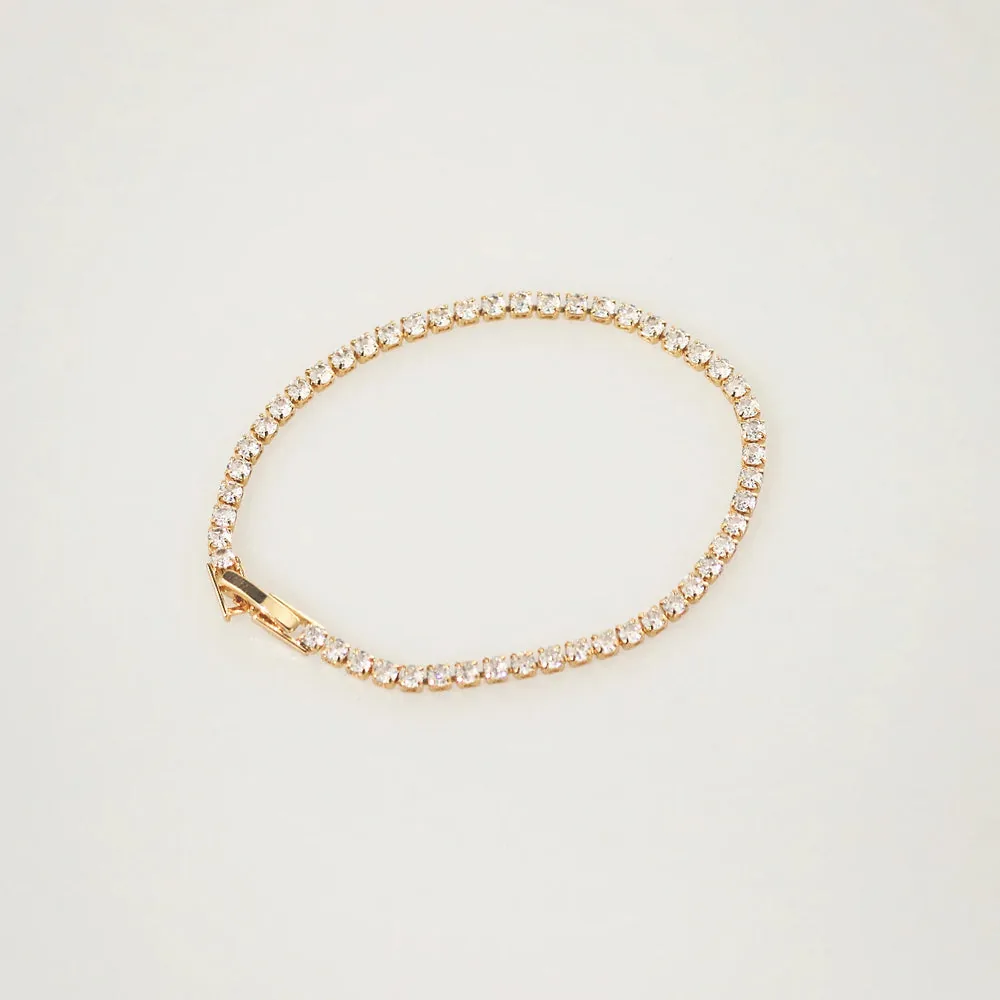
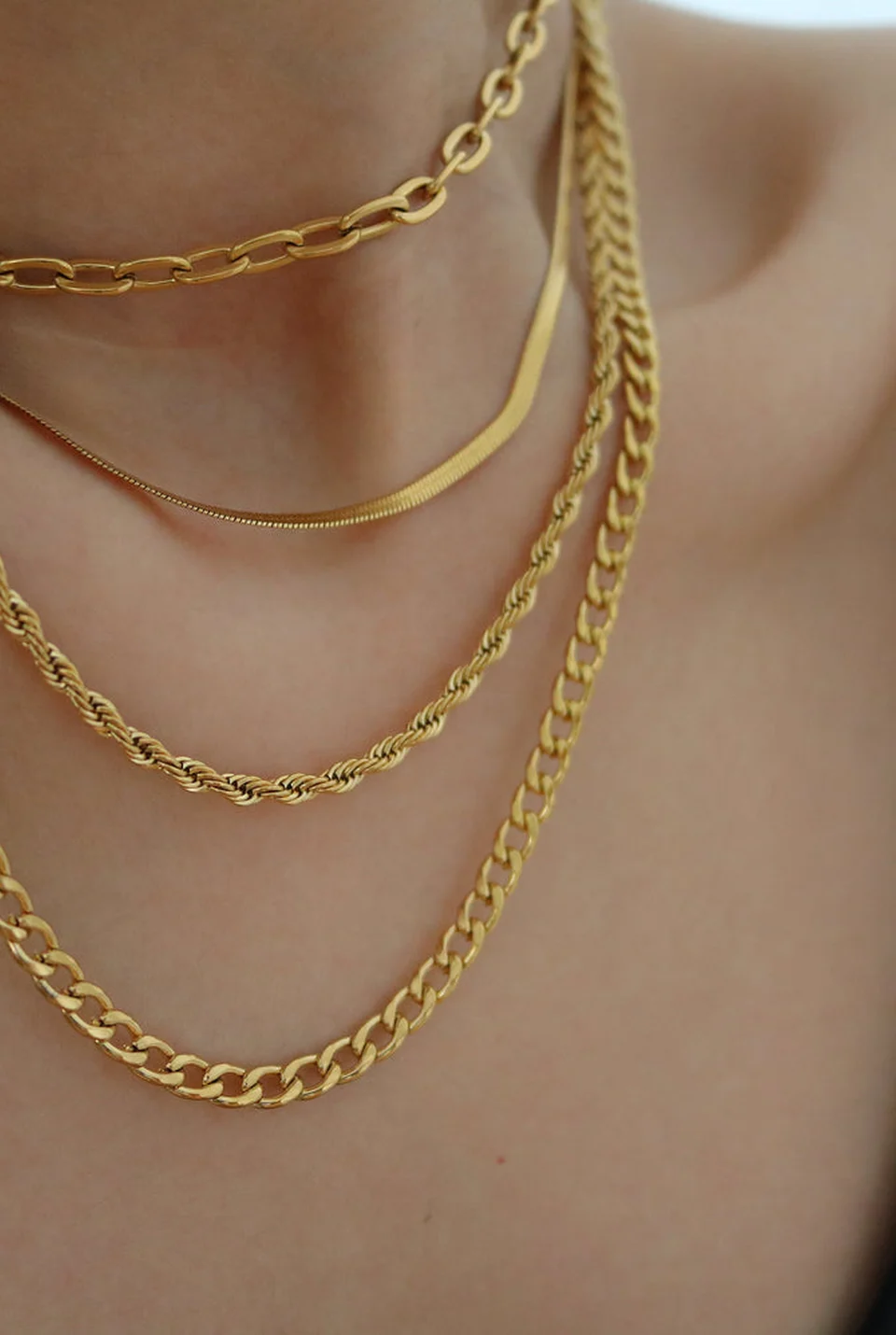
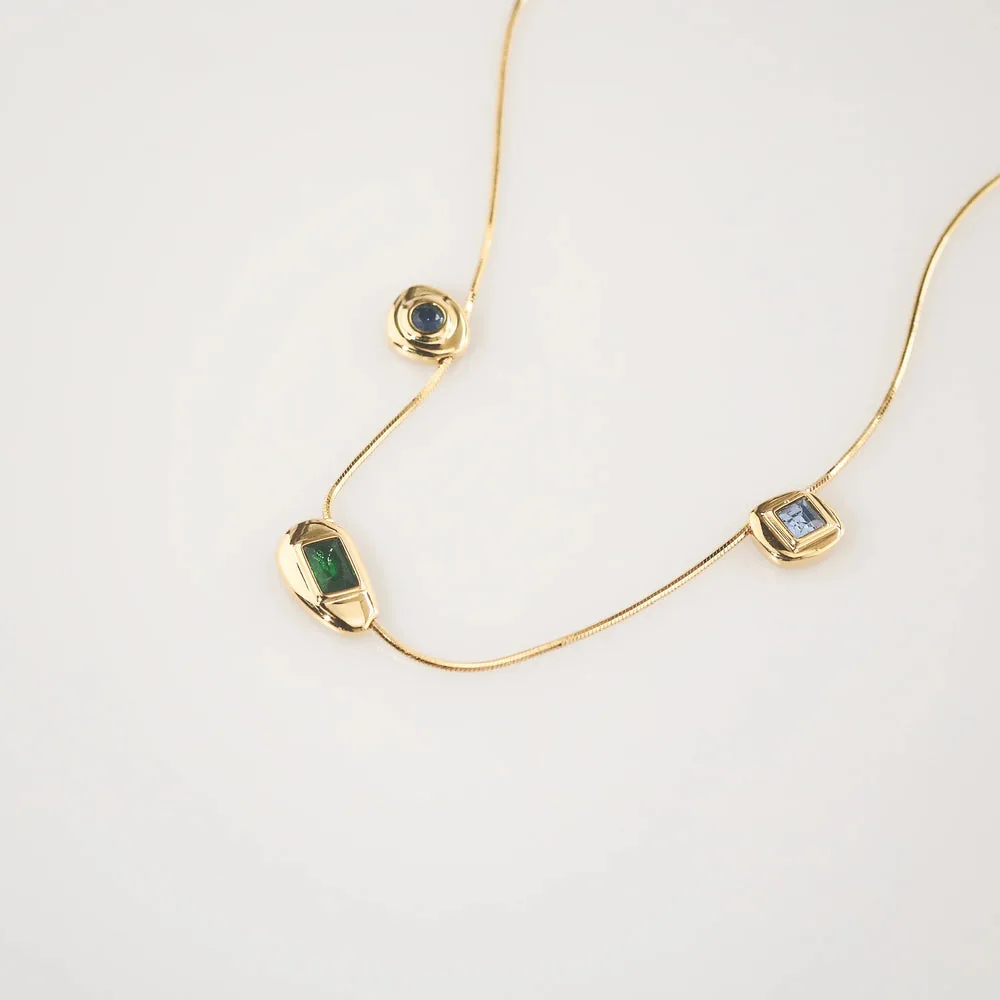
For a first boutique, the demi-fine band is the sweet spot. It sits above throwaway fashion jewelry and below solid-gold fine jewelry. The pieces look and wear like fine jewelry but carry a fashion-friendly price your customer will repurchase — which is exactly what you want when you're learning what sells. Our line is 18k-gold-plated over 316L stainless steel: plated, not solid gold, with a corrosion-resistant steel core that survives showers and sweat. Stones are cubic zirconia simulants, not diamonds; pearls are freshwater or simulated. That honest framing is a feature, not a limitation — it's what keeps pieces off your returns shelf. For the full picture of why this material reorders, our pillar on wholesale jewelry for boutiques is the place to start.
Step 2: Set a realistic opening budget & open-to-buy
The number-one reason new boutiques stall is spending the whole opening budget on inventory and leaving nothing for everything else. Split your starting cash into buckets before you shop: inventory, fixtures and displays, packaging, your website or point-of-sale, marketing, and a cash cushion for slow weeks. Inventory should never be the only line item.
The inventory portion is your open-to-buy — the money you've allocated to stock for a given period. The discipline that separates boutiques that reorder from boutiques that get stuck is simple: buy your core deep and your statement pieces shallow. Bestselling basics — studs, hoops, dainty necklaces, stacker rings — should make up the bulk of the buy, because they turn over and you'll reorder them. Statement pieces earn their place as a small accent that gives your case personality, not the foundation. This is exactly why a low minimum matters when you're starting out: you can validate what your real customers buy before committing serious cash. Our guide to wholesale jewelry with no or low minimum shows how a $100 starting order lets you test an assortment instead of guessing.
Step 3: The legal basics — register & get a resale certificate
This is the unglamorous step everyone wants to skip, and skipping it costs you money. To buy wholesale tax-free — and to buy from most legitimate suppliers at all — you generally need to register your business and obtain a resale certificate (also called a sales-tax permit or seller's permit, depending on your state). The resale certificate is what lets you buy inventory without paying sales tax on it, because you'll collect that tax from your customer at the point of sale instead. Without it, you're paying tax twice and eroding your own margin.
A quick, honest caveat: this is general information, not legal or tax advice. Requirements vary by state and locality — what you register, where, and how you collect and remit sales tax all differ. Confirm the specifics with your state's department of revenue or a local accountant before you open. The point here is simply that a registered business plus a resale certificate is the price of admission to wholesale, and it's worth doing early so your first order isn't held up.
Step 4: Choose a sourcing model
How you source determines your cash risk, your margin, and how much of your week disappears into operations. There are three common paths for a new boutique, and they're not mutually exclusive — many owners blend them. Here's how they compare for someone just starting out.
| Model | Upfront cash & risk | Margin & control | Best for the new boutique |
|---|---|---|---|
| Low-minimum wholesale (own your stock) | Modest — a small opening buy you choose, not a four-figure commitment. You own what you stock. | Full keystone margin and full control of pricing, presentation and customer experience. | The lowest-risk strong start — you build a real, curated case and keep the margin. |
| Dropshipping (no inventory) | Very low — no stock to buy, but you're dependent on a third party to fulfil. | Thinner margin and less control over packaging, timing and quality. | Testing demand or extending a catalog online without holding cash in stock. |
| Handmade / your own production | Time-heavy — materials plus your labor, and capacity that's hard to scale. | Highest control and a unique story, but margin is capped by how fast you can make. | A signature line or hero collection — rarely the whole assortment at the start. |
For most first-timers, low-minimum wholesale is the lowest-risk way to launch with a real boutique feel: you own the inventory, you keep the margin, and you're not betting the budget on one giant order. Dropshipping is a useful way to test demand or widen an online range without holding cash in stock — our breakdown of jewelry dropshipping & low-minimum sourcing covers when it fits. Many owners start wholesale for the core and dropship a long tail online; both can run side by side.
Step 5: Build the opening assortment & price it
Your opening case should be mostly proven bestsellers. Lead with the everyday core, because that's what reorders and what funds the rest of the store:
- Earrings — studs and small hoops first; they're the most repeatable impulse buy and gift.
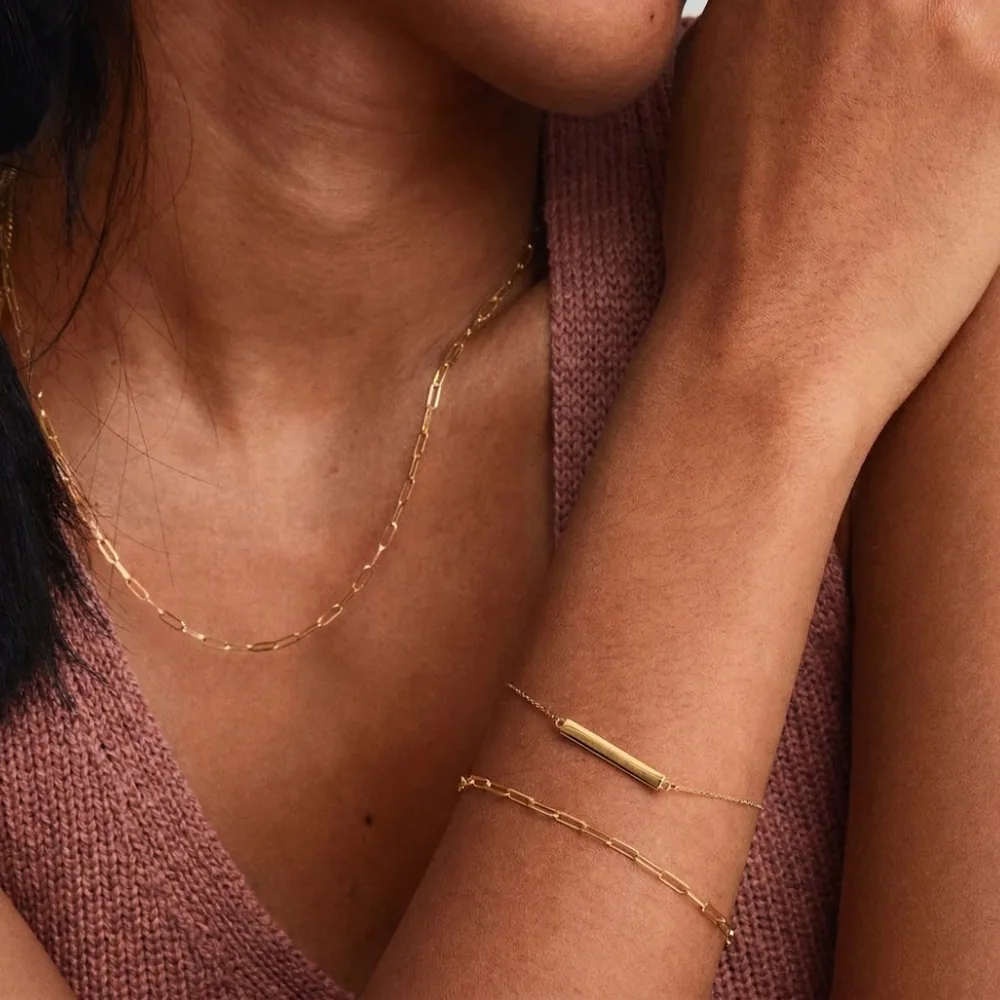
- Necklaces — dainty and layering chains that stack, plus a few giftable pendants.
- Rings — stackable bands and adjustable styles that sell in multiples and dodge sizing headaches.
- Bracelets — a tight edit of chain and cuff styles.
- Sets — a handful of coordinated sets as your higher-ticket, gift-ready anchors.
Statement pieces go in sparingly — one or two per category to add character, not to dominate the buy. Then price with simple keystone math: retail equals roughly two times your wholesale cost as your floor, which is a 100% markup and a 50% gross margin before packaging, card fees and returns come out. Many boutiques find demi-fine pieces can support a 2–2.5x multiple, though it varies by market and piece. We publish a suggested retail on every product so you can price cleanly against your floor; the full method, including a worked example, lives in how to price wholesale jewelry. One honesty note worth repeating to your own customers: describe plated demi-fine accurately — gold-plated, not solid; CZ, not diamond. Customers who know exactly what they're buying come back; surprised ones return things.
Finally, plan to sell in both channels from day one. An in-person presence — a shop, a market booth, a pop-up — lets customers try pieces on, while an online store captures the people who found you and want to reorder at midnight. Strong merchandising lifts both; our guide on how to display & merchandise jewelry covers the display moves that turn browsers into baskets. When you're ready to map real pieces to your price points, browse the full wholesale line.
More wholesale guides
If you're building out your sourcing plan, these go deeper on the decisions that matter most for a new boutique:
- Wholesale Jewelry for Boutiques — the pillar guide to what reorders and how to vet a supplier.
- Wholesale Jewelry With No / Low Minimum — test an assortment without over-committing your cash.
- Jewelry Dropshipping & Low-Minimum Sourcing — start small without the inventory gamble.
- How to Price Wholesale Jewelry — keystone math for healthy, defensible margins.
- How to Display & Merchandise Jewelry — the presentation that turns browsers into buyers.
How to start a jewelry boutique FAQ
There's no single figure — it depends on whether you're online-only, at markets, or in a storefront. The smarter framing is to split your cash into buckets: inventory, fixtures, packaging, your site or point-of-sale, marketing, and a cushion for slow weeks. Starting with low-minimum wholesale keeps the inventory line small, so you don't sink the whole budget into stock.
Generally yes. Registering your business and getting a resale certificate (or seller's permit) lets you buy inventory tax-free, since you collect sales tax from your customer instead. This is general information, not legal advice — requirements vary by state and locality, so confirm with your state's department of revenue or an accountant.
Our minimum order is $100, which is low enough to trial a curated mix before you scale. We offer NET-60 terms at 0% interest, and your first order ships with free returns. That combination is designed to let a new boutique test what actually sells with very little risk.
Lead with the everyday core: studs and small hoops, dainty layering necklaces, and stackable or adjustable rings. These reorder fastest and fund the rest of the store. Add a small number of statement pieces and giftable sets for character, but keep the core deep and the statements shallow.
Low-minimum wholesale is usually the lowest-risk strong start — you own your stock, control presentation, and keep the full margin. Dropshipping carries almost no inventory cost but thinner margin and less control over fulfilment and quality. Many owners blend them: wholesale for the core, dropship a long tail online.
Absolutely — the key is accurate description. Our pieces are 18k-gold-plated over a nickel-safe 316L stainless-steel core, not solid gold, and the stones are cubic zirconia simulants rather than diamonds. Sell it as exactly that, pair it with a color warranty, and customers know what they're getting — which is what keeps them reordering instead of returning.
Open a Couture's Corner wholesale account
Start your boutique with waterproof, nickel-safe 18k-gold-plated pieces your customers reorder. Browse the full line or read up on starting small with low-minimum ordering. $100 minimum · NET-60 terms · first order ships with free returns.
Open a wholesale account →