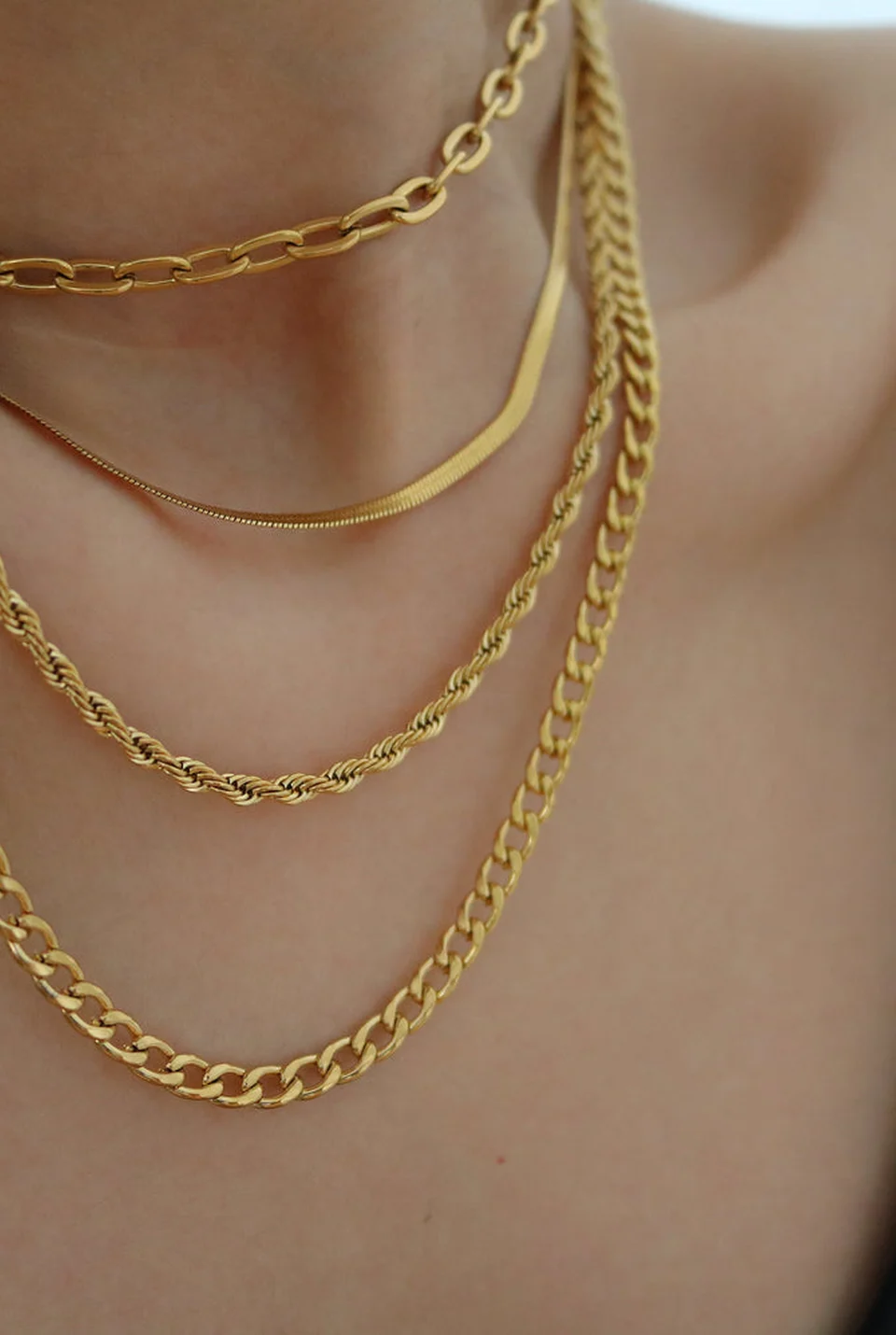
You bought beautiful inventory, you laid it out, and it still sits there — that's the merchandising problem, not a product problem. The case is crowded, every piece is competing with the one next to it, and a walk-in's eye slides right off the glass. The good news is that how to display jewelry in a boutique is a learnable craft, not a budget arms race. This guide walks you through the moves that actually shift sell-through: zoning your case by a price ladder, staging pieces as buildable stacks and matching sets, lighting and negative space so plated jewelry reads "fine," writing honest little tags that close the sale, rotating by season, and translating all of it online. Concrete, doable this weekend.
Key takeaways
- Zone the case by price. Impulse pieces at the register, your everyday core at eye level, the hero piece in the window — the layout itself should walk a customer up the ladder.
- Sell the stack, not the single. Staging rings as a buildable stack, necklaces as a layered look and pearls as a set is the single biggest lever you have on basket size.
- Honest tags are merchandising. A small clear card that says "cubic zirconia," "18k gold-plated" or "freshwater pearl" builds the trust that closes the sale and keeps the piece off your returns shelf.
Zone your case by a price ladder
The most common mistake I see in a boutique case is that everything is treated as equal — the $19 stud and the $58 statement pendant share the same shelf at the same height, and the eye has nowhere to climb. Good jewelry store layout is really a price ladder you can walk. Decide where each tier lives physically and let the architecture of the case do the selling.
Put your lowest-ticket, highest-impulse pieces — thin huggies, single studs, a plain stacking band — right at the register, where a customer's hand is already reaching for a wallet. These are the "add one more" pieces; price them clearly and keep them stocked deep. Reserve the prime real estate, the eye-level center of the main case, for your everyday core: the demi-fine pieces a regular comes back for — the layering chains, the small CZ studs, the everyday band. That's the merchandise that pays your rent, so it gets the best light and the most room. Then give one true hero — a statement pendant, a bold cocktail ring — the window or a single pedestal, lit alone. The hero rarely sells in volume, and that's fine; its job is to stop the sidewalk and pull people through the door toward the core. When the ladder is built into the space, a shopper who came for studs naturally drifts up to the core, and the window did the work of getting them in.
Sell the stack, the layer & the set
If you change one thing after reading this, make it this: stop displaying single pieces in isolation and start staging the combination. A lone ring on a pad is a $40 decision. The same ring shown mid-stack — a plain band, a CZ eternity, a signet, worn together on one finger form — is a "build the look" decision, and the customer reaches for two or three. Multi-piece staging is the biggest lever you have on basket size, full stop, and it costs you nothing but a little styling time.
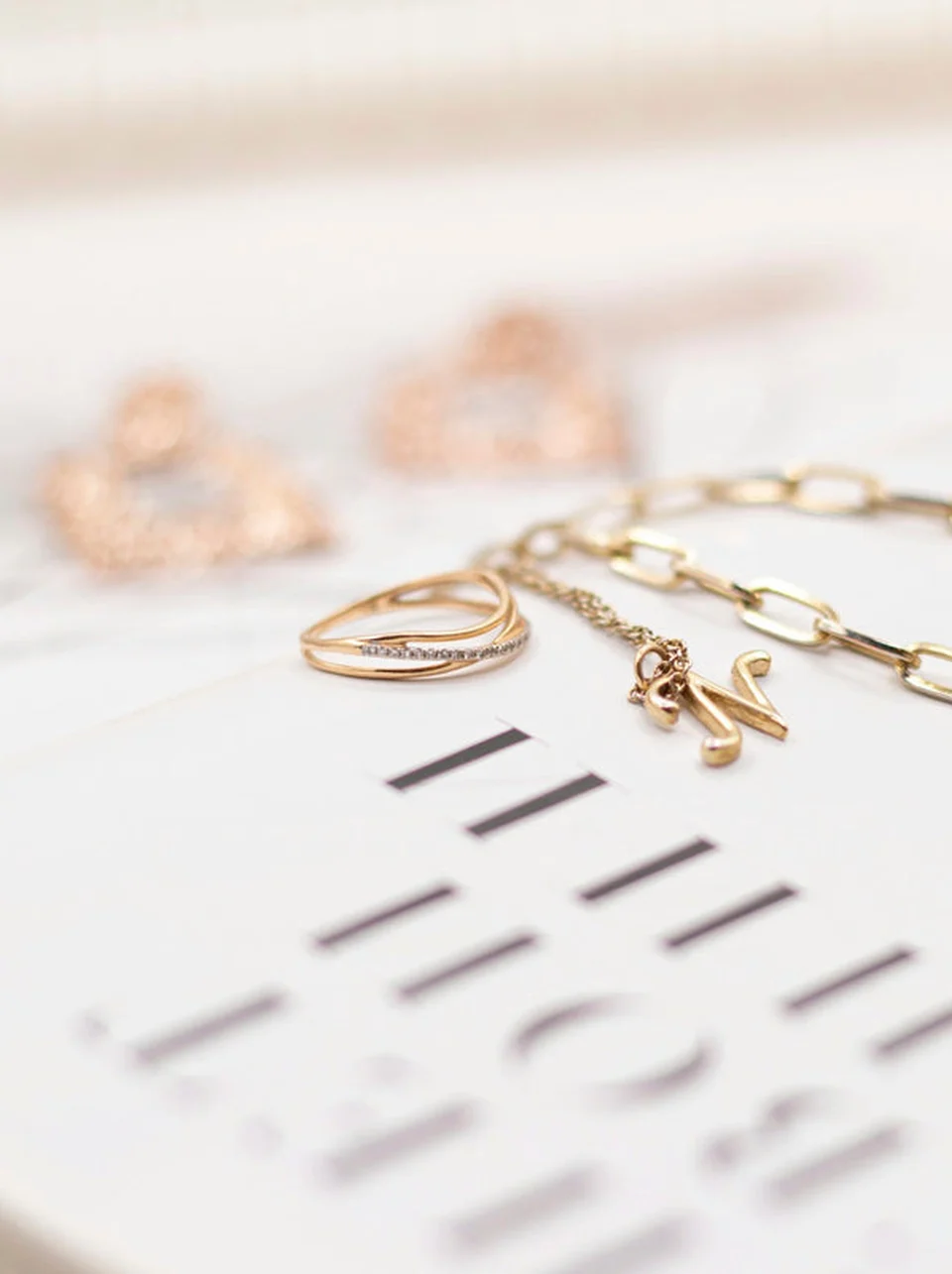
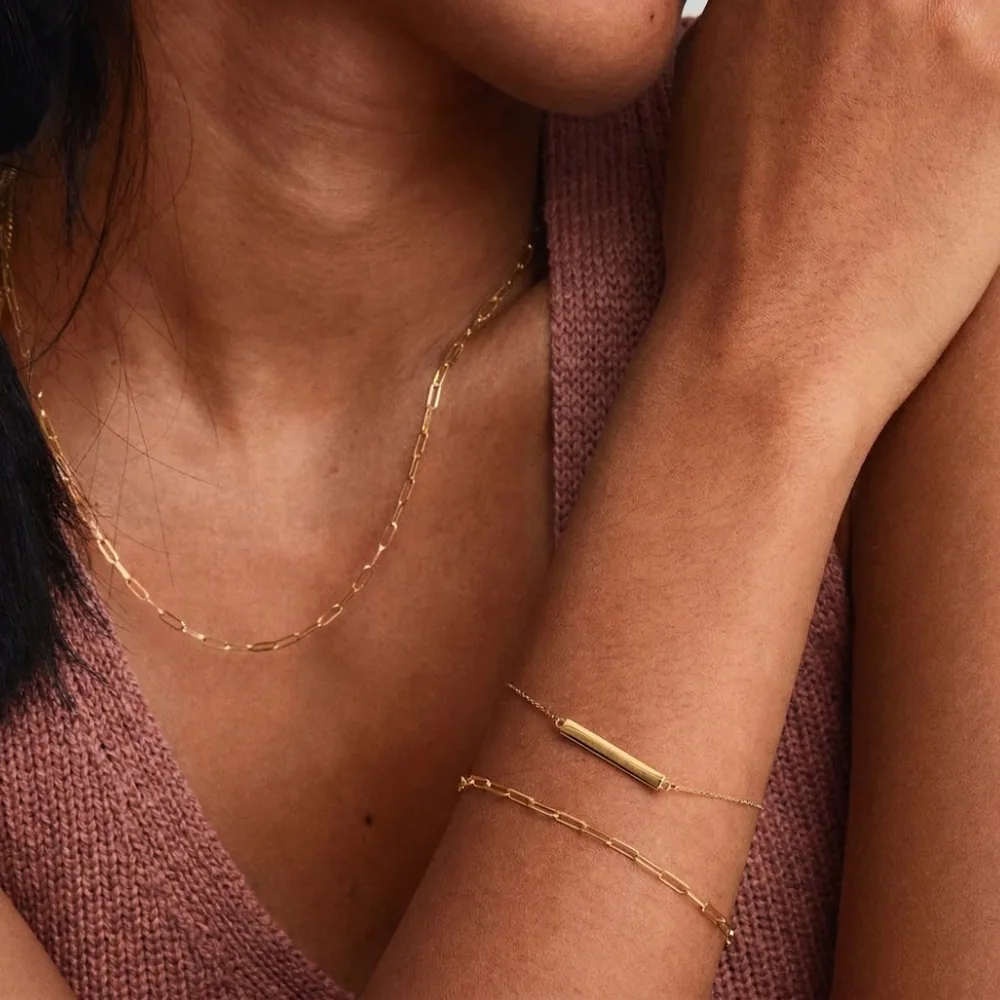
Do it on every category. Stage rings as a buildable stack on a finger bust so the trio reads as one styled look (the mechanics of building a sellable stack are in our rings guide). Show necklaces as a layered look — a 16" choker, an 18" pendant and a 20" chain on a tiered necklace stand — so the customer sees the finished neckline instead of one thin chain (the focal piece that anchors a layer is our pendant & charm guide). Stage pearls as a matching set — studs plus a pendant, or a bracelet-and-earring pair on one card — because pearls are the category customers most expect to "match," and a set practically sells itself as a gift (more on pearls as the set in our pearl jewelry guide). Put a small "Shop the set — $X together" card beside each grouping; naming the bundle and its price removes the friction of the customer doing the math.
Light it & give it negative space
Well-made 18k-gold-plated pieces over 316L steel read as fine jewelry under the right light — and read as a flea-market tray under the wrong one. Two cheap fixes do almost all the work here, and neither requires renovating your case.
First, light. Cool, bright LED spots aimed into the case make CZ throw the sparkle that sells it and make plated gold look rich rather than brassy. Ambient overhead light alone flattens everything; a few small puck or strip LEDs angled at the metal change the whole read of the case. Second, negative space. The instinct when you've invested in inventory is to fill every inch — resist it. Empty space around a piece is what signals value; a crowded tray signals clearance. Display a curated edit at eye level and keep your depth in the back drawer, restocking the case as it sells rather than cramming it. Use risers, busts and stands to give pieces height and shadow so they're not all lying flat in one plane. A handful of pieces, well-lit, with room to breathe, will out-sell a packed case every time — because the staging is telling the customer this is worth the ticket.
Honest signage is merchandising
Here's the part most display advice skips: your tags are part of the visual merchandising, and honest ones close more sales than vague ones. A small, clean card that reads "18k gold-plated over stainless steel · cubic zirconia · nickel-safe" does three jobs at once. It answers the question the customer is already silently asking ("is this real gold? a diamond?"), it removes the fear of being fooled that kills demi-fine sales, and it looks intentional — specificity reads as confidence, and confidence reads as quality.
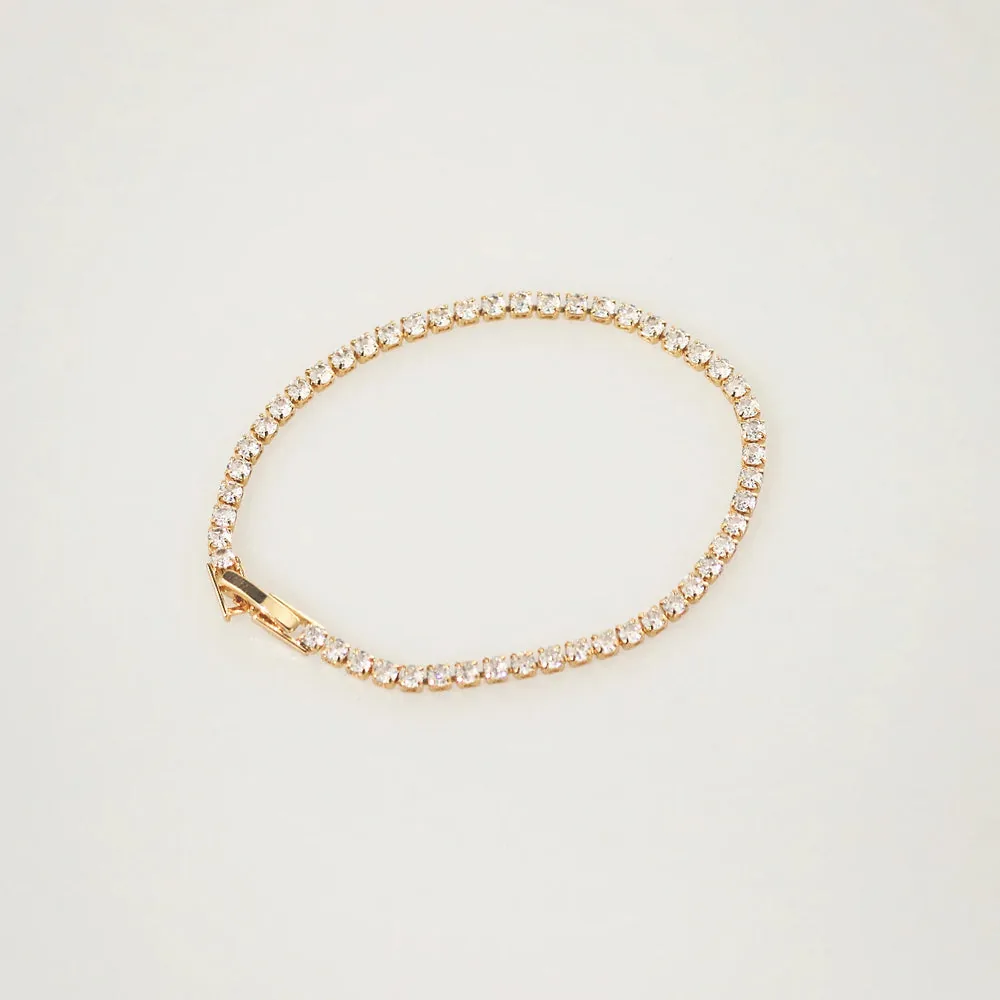
Be precise and be plain. The clear stones are cubic zirconia, a brilliant simulant — never "diamond." The metal is 18k gold-plated over 316L stainless steel — never "solid gold." Pearls are freshwater or simulated — say which. The finish is nickel-safe — not "nickel-free." This isn't a legal disclaimer to hide in small print; it's a selling point to feature. A customer who buys a "brilliant CZ on warrantied 18k-plated steel" is a happy repeat buyer; the same piece sold as a "diamond" comes back as a return and a one-star word-of-mouth. The same standard is how you should vet a supplier, too — if a line sheet calls plated metal "gold" or a simulant "diamond," that's the supplier you walk away from, because their overstatement becomes your liability at your own counter. Honest description isn't the cautious choice; it's the one that builds a boutique customers trust enough to come back to.
Case zones & what to place in each
Here's the price ladder translated into a working case map — four zones, each with a different merchandising job. Build your layout around these and the space starts selling for you.
| Zone / placement | What to put there | The merchandising job |
|---|---|---|
| At the register (impulse) | Lowest-ticket, high-impulse pieces — single studs, thin huggies, a plain stacking band, simple charms. Stocked deep. | The "add one more" sale. Capture the small extra while the wallet is already out and the decision is easy. |
| Eye-level core | Your everyday demi-fine bread-and-butter — layering chains, CZ studs, the everyday band, your proven repeat-buyers. | Pay the rent. This is the merchandise that sells in volume, so it gets the prime real estate and the best light. |
| The window / hero spot | One true statement piece — a bold pendant or cocktail ring — lit alone on a pedestal with lots of negative space. | Stop the sidewalk. The hero's job is to pull people through the door, not to sell in volume itself. |
| The "shop the look" / stack station | Staged combinations — a ring stack on a finger bust, a layered necklace trio, a matched pearl set — each with a "shop the set" price card. | Lift the basket. Show the finished look so the customer buys two or three pieces instead of one. |
Then keep it alive: rotate the window and the stack station by season so regulars always see something new, and refill your fast-movers from the back drawer weekly — an empty slot where your best seller used to be is sales you never made. For what to pulse and when, our seasonal buying guide maps the calendar.
Translate the same ideas online
Your website and your Instagram are just another case, and the same five rules apply. The hero photo is your window — lead with one styled, well-lit statement shot, not a flat product cut-out, because that's the image that earns the click in a feed. Build "shop the look" bundles the way you build the stack station: a product page or a saved post that shows the layered necklaces or the ring stack together, with a one-tap way to add all of them. Use set pricing online exactly as you do on the counter card — "the trio, $X together" — so the math is done for the shopper. And carry the honest copy straight into your product descriptions: "18k gold-plated over 316L stainless steel, cubic zirconia, nickel-safe, freshwater or simulated pearl." Honest specs online cut your return rate and your "is this real?" DMs at the same time. The discipline that makes your physical case convert is the same discipline that makes your storefront convert — price ladder, the styled set, light and space, and the truth on the label.
More wholesale guides
This display guide sits inside our stockist series — go deeper on the pieces you're staging:
- Wholesale Jewelry for Boutiques — the pillar: what to stock, margins, MOQs and terms.
- Wholesale Rings — how to build and stage the ring stack that lifts the basket.
- Wholesale Pendant & Charm Necklaces — the focal pieces that earn the window hero spot.
- Wholesale Pearl Jewelry — selling pearls as the matched set.
- Seasonal Jewelry Buying Guide — what to rotate into the window and stack station by season.
- How to Start a Jewelry Boutique — the full playbook if you're still setting up.
- Browse the full wholesale line to fill the case.
Jewelry display & merchandising FAQ
Zone your case by a price ladder and stage combinations, not singles. Put impulse pieces at the register, your everyday core at eye level, and one hero piece in the window. Then build a "shop the look" station with ring stacks, layered necklaces and matched sets — staging the combination is the single biggest lever you have on basket size.
Cramming the case so everything competes, and displaying every piece in isolation. A crowded tray reads as clearance and a lone ring on a pad is a single-item decision. Edit down, give pieces light and negative space, and stage them as buildable stacks and sets so the customer reaches for two or three.
A few small LED puck or strip lights angled into the case do almost all the work. Cool, bright light makes cubic zirconia throw the sparkle that sells it and makes 18k-plated gold look rich rather than brassy. Ambient overhead light alone flattens everything, so add directional spots aimed at the metal.
Yes — and feature it, don't hide it. A clean card that reads "18k gold-plated over stainless steel, cubic zirconia, nickel-safe" answers the customer's silent question, looks intentional, and builds the trust that closes the sale. A piece sold honestly stays sold; a "diamond" that's really CZ comes back as a return.
Couture's Corner sets a $100 minimum order with NET-60 terms at 0% interest, and your first wholesale order ships with free returns. There's no per-style minimum, so you can buy a curated edit to merchandise your case, sell it through, and pay once it's earning on your shelf.
Treat your storefront as another case. Lead with one styled hero photo as your window, build "shop the look" bundles like your stack station, use set pricing the way you'd use a counter card, and carry honest specs straight into your product descriptions. Honest copy online cuts both your return rate and your "is this real?" messages.
Open a Couture's Corner wholesale account
Merchandise a case that sells the stack. Browse the full wholesale line or start with stackable rings — all 18k gold-plated over 316L stainless steel, honestly described. $100 minimum · NET-60 terms · first order ships with free returns.
Open a wholesale account →