When you're sourcing for a boutique, "no minimum order" sounds like the lowest-risk way to test new jewelry — order one of everything, see what sells, reorder the winners. Sometimes that's exactly right. But a true no-minimum almost always comes with a quiet trade: a higher unit cost, thinner quality, or a dropship middleman taking a cut you can't see. This guide maps the actual MOQ landscape — no-minimum dropship, low-minimum wholesale, and high first-order programs — so you can match the right structure to your open-to-buy, your cash flow, and how seriously you want to test a line before committing.
Key takeaways
- "No minimum" is rarely free. True no-MOQ ordering usually means a higher per-piece cost, a dropship markup, or fashion-grade quality — because the supplier's lowest tier still has to be profitable on a single unit.
- A low minimum is the sweet spot for testing. A modest floor lets you buy a real curated mix — enough SKUs to read sell-through — at honest wholesale pricing rather than one-off rates.
- Terms reduce the risk more than a "0 minimum" does. NET-60 and free first-order returns let you test an assortment without tying up cash, which is the actual reason a low minimum feels risky.
The MOQ landscape: three ways to buy
"Minimum order" gets used loosely, so it helps to separate the three structures you'll actually meet when sourcing wholesale jewelry. Each one trades risk against unit economics differently — and the right pick depends on whether you're testing a brand-new line or restocking proven sellers.
| Buying structure | What it means | The honest trade-off | Best for |
|---|---|---|---|
| No-minimum dropship | Order 1 unit at a time; supplier ships direct to your customer. | Highest per-piece cost, you never touch or QC the product, and quality skews fashion-grade. | Pure-online sellers with zero inventory budget. |
| True no-MOQ wholesale | Buy any quantity you hold yourself, but at the lowest (least discounted) price tier. | Convenient, but you pay the single-unit rate — the per-piece cost only drops as volume rises. | Topping up one or two SKUs between orders. |
| Low-minimum wholesale | A modest order floor (e.g. a dollar value) unlocks true wholesale pricing on a curated mix. | You commit a small budget up front — but get boutique-grade unit costs and a real assortment to test. | Boutiques testing a new line for sell-through. |
| High first-order | A steep opening minimum (often four figures) before any reorder freedom. | Best per-unit pricing, but a large, illiquid bet on an unproven line. | Established stores with proven demand. |
The pattern underneath all four is the same one suppliers describe openly: bulk pricing tiers mean the more you buy, the cheaper each piece gets, but the lowest tier still has to be profitable for the maker on a single unit (a point most wholesale-pricing guides make plainly). That's why a literal "0 minimum" so often shows up as a higher sticker price. The question isn't "which has the lowest minimum" — it's "which structure lets me test honestly without overpaying or over-committing." For the bigger picture on terms, margins and spec-reading, start with our pillar guide on wholesale jewelry for boutiques.
Why a low minimum beats a true no-minimum for testing
Testing an assortment isn't about buying one of everything — it's about buying enough of a curated mix to read a real signal. One unit of a SKU tells you almost nothing; if it sells, you can't tell whether you got lucky or found a hero. A low minimum that's denominated in dollars (not in a rigid per-style pack) lets you spread a small budget across the everyday core — a few necklaces, a couple of earring styles, a stacker ring — and watch which ones actually reorder.
This is where open-to-buy discipline matters. Your open-to-buy is simply the budget you have to spend on new inventory in a given period, and a good OTB plan exists so you can test new products without robbing the budget for your proven sellers. A modest minimum fits cleanly into that plan: it's small enough to risk on an untested line, but large enough to buy at honest wholesale pricing instead of single-unit rates. A true no-minimum, by contrast, tempts you to "just grab one" repeatedly — which fragments your OTB and pays the worst per-piece price on every reorder.
At Couture's Corner the floor is a $100 minimum order. That's deliberately low: it's roughly three to four hero pieces, enough to build a testable mini-assortment without a four-figure commitment. It buys curated boutique-grade product — 18k-gold-plated 316L stainless steel, not fashion-grade flash plating — at a real wholesale price, so your test margins reflect what your reorder margins will be. (For how to turn that wholesale cost into a shelf price that holds, see our companion guide on how to price wholesale jewelry.)
The "no-minimum" quality trap — and how to screen for it
The most expensive part of a cheap no-minimum order isn't the unit cost — it's the return. A piece that fades, turns a wrist green, or irritates a customer's ears comes back to your counter, and that one return can erase the margin on several sales. The way to avoid it is to screen the material before you screen the minimum.
What we stock is 18k-gold-plated 316L stainless steel: plated, to be precise — not solid gold and not vermeil. Under the FTC's jewelry guides, "gold-plated" means a layer of at least 0.175 micron of 10k-or-finer gold over a base metal, "heavy gold electroplate" means at least 2.5 microns, and "vermeil" specifically requires at least 2.5 microns of gold over a base of sterling silver (see 16 CFR Part 23 and §23.4). Our base is steel, not silver, so the honest term is plated — and we say so on every listing, because a surprised customer is a returning customer in the wrong sense.
The steel core is what makes the plating worth buying: 316L resists corrosion, so it holds up to showers, sweat and pools — what we call "waterproof" — though the plating itself still wears over years of daily contact. The same low-nickel-release core is why these pieces are hypoallergenic for sensitive-skin customers. We back the color with a 1-Year Color Warranty. If you're stocking for swim-and-shower lifestyles specifically, our guide to waterproof jewelry wholesale walks through exactly what that core does and doesn't promise. When you compare a no-minimum offer against a low-minimum one, ask the supplier the base metal, the plating thickness, and the warranty — if a "no MOQ" seller can't answer those, the low minimum was never the real bargain.
Wholesale jewelry minimum order FAQ
There are no-minimum options, but "fine" is doing a lot of work in that phrase. Most true no-MOQ jewelry is fashion-grade, and the genuinely affordable demi-fine pieces usually carry a low minimum instead, because a curated, boutique-grade assortment is priced at wholesale tiers rather than single-unit rates.
Because a supplier's lowest price tier still has to be profitable on a single unit. Wholesale pricing is tiered — the more you buy, the cheaper each piece — so ordering one at a time means paying the least-discounted rate. A modest minimum unlocks the lower tier without forcing a large commitment.
Our minimum order is $100, which is roughly three to four hero pieces. It's deliberately low so you can build a testable mini-assortment and read sell-through, while still buying curated 18k-gold-plated 316L stainless steel at honest wholesale pricing rather than one-off single-unit rates.
Terms matter more than the minimum here. We offer NET-60 at 0% interest, so payment falls due after your customers have had time to buy, and your first order ships with free returns — so testing an assortment doesn't lock up working capital you might need elsewhere in your open-to-buy.
Orders ship from our US warehouse in Colorado and typically arrive in about 15 business days. Sourcing domestically keeps lead times predictable, which matters when you're planning an open-to-buy around a season or a launch rather than waiting on long overseas transit.
Open a Couture's Corner wholesale account
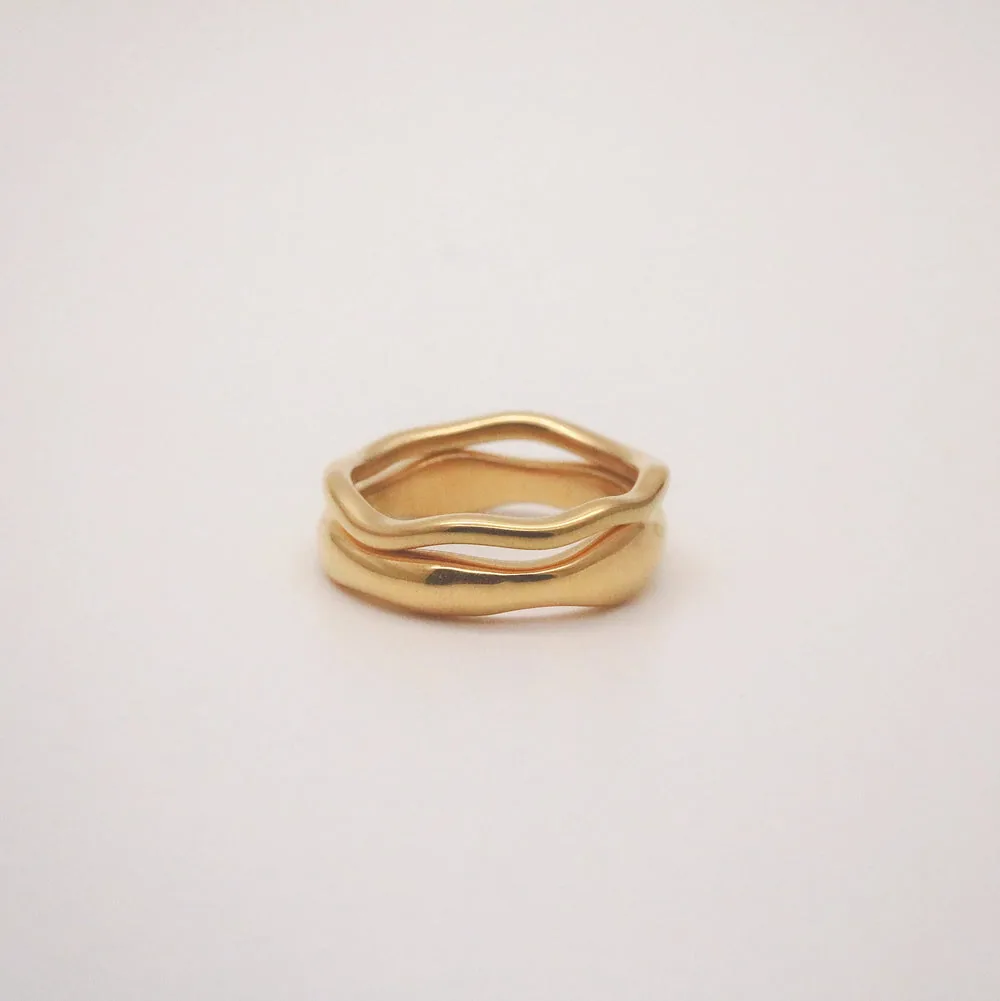
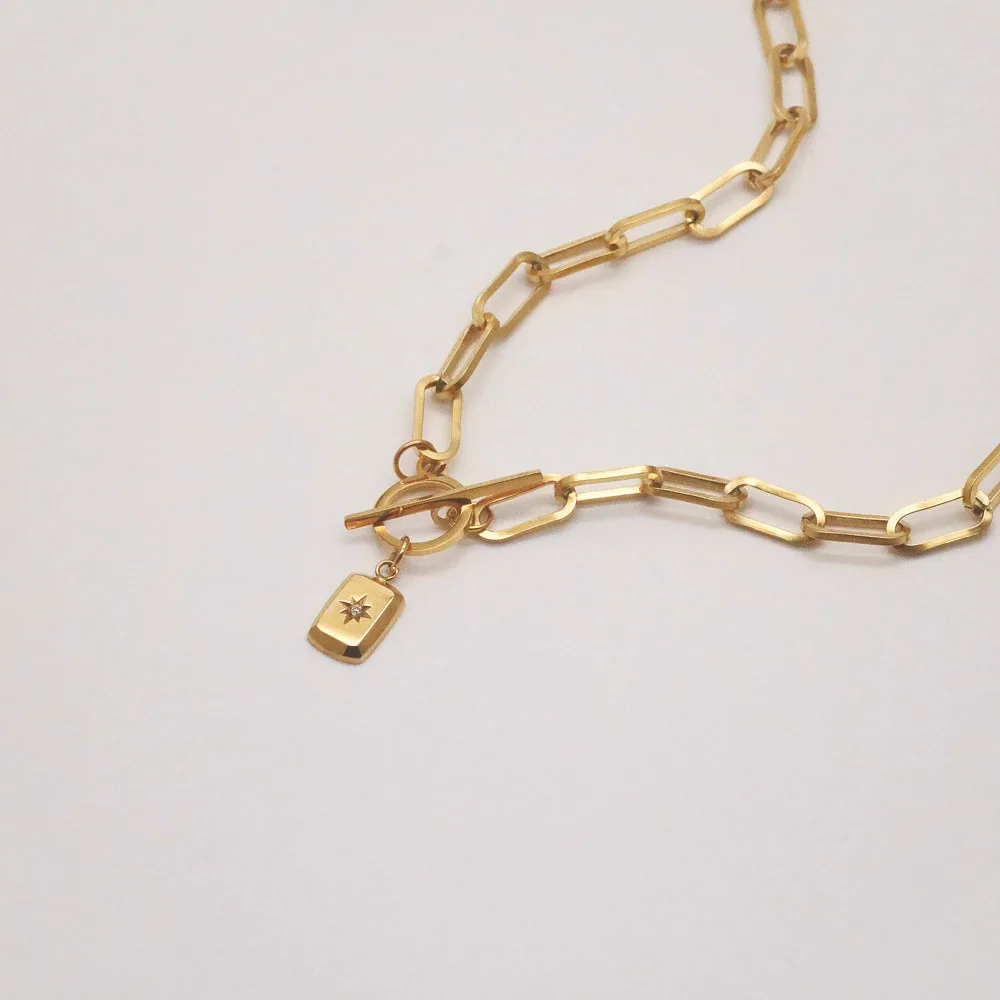
Test the line the low-risk way: browse the full collection and build a $100 starter mix around proven heroes like the 18k-gold-plated starburst pendant necklace ($39), the mini sun hoop earrings ($35), and the 2mm gold stacker band ring ($28). $100 minimum · NET-60 terms · first order ships with free returns.
Open a wholesale account →