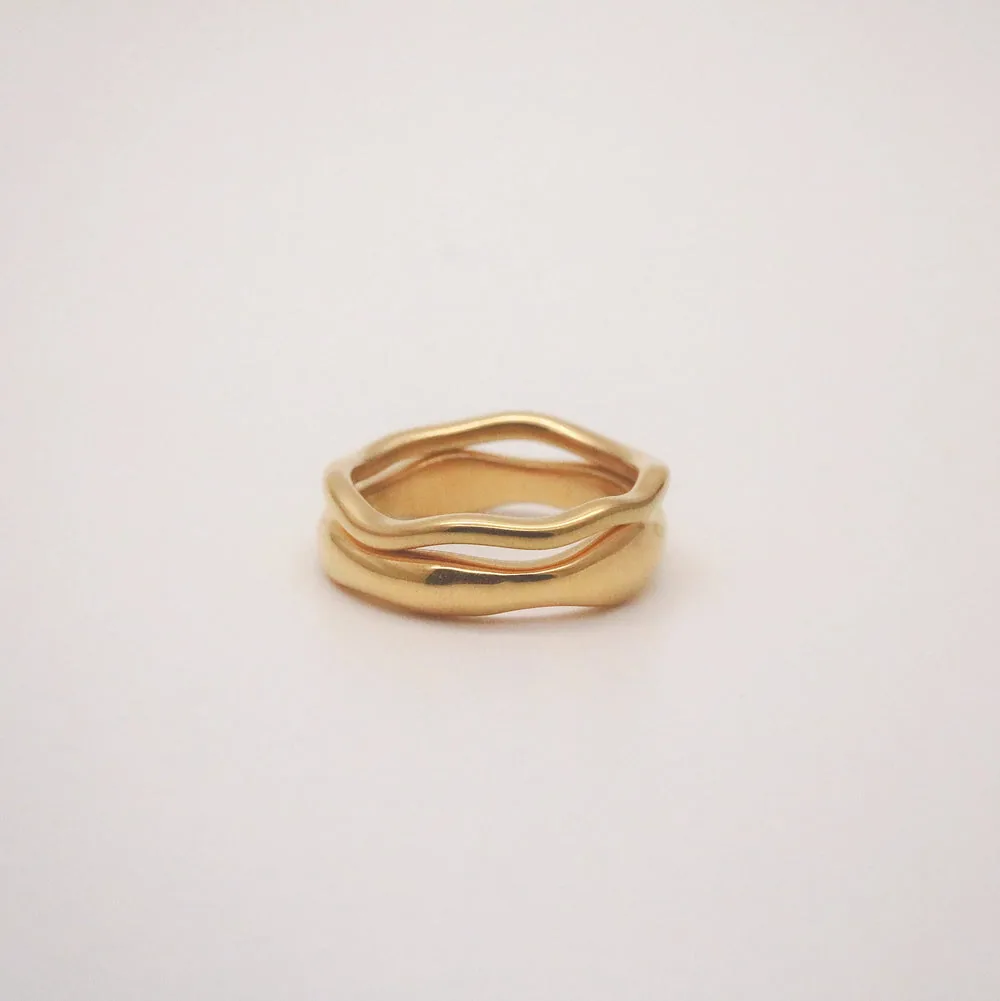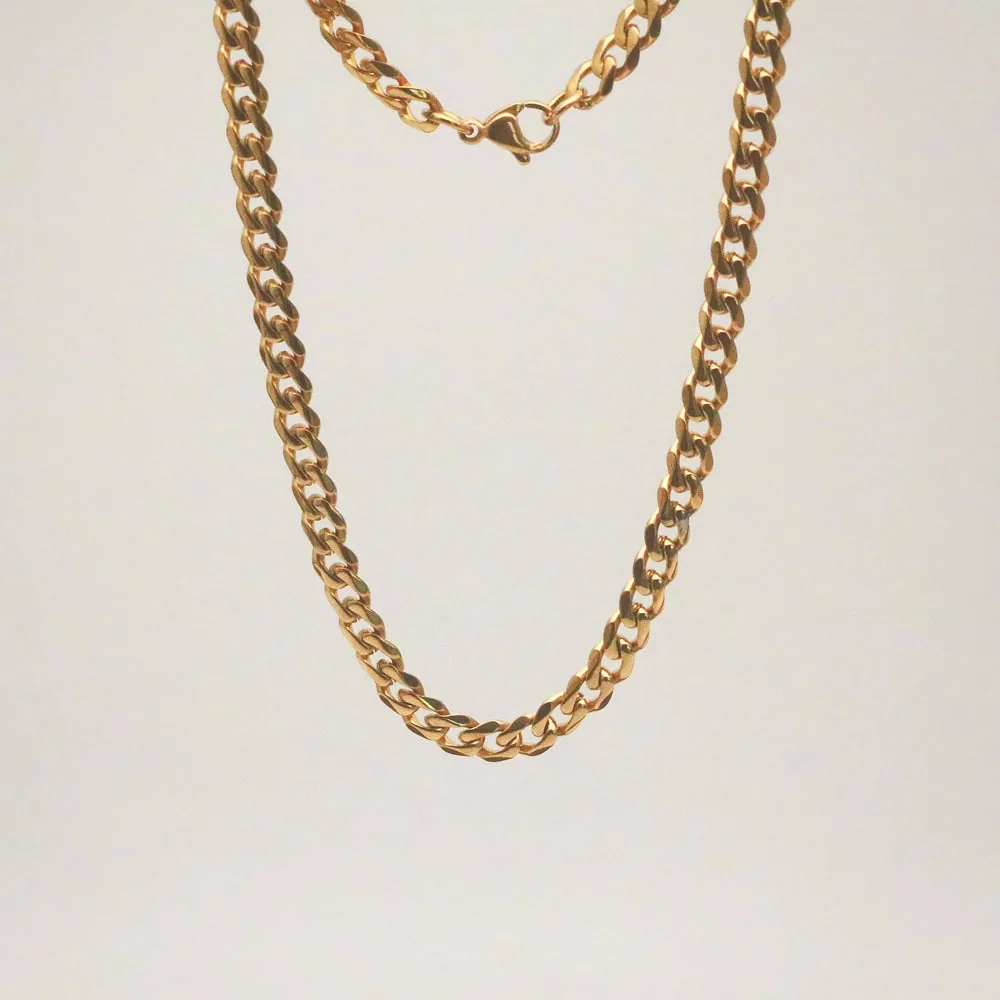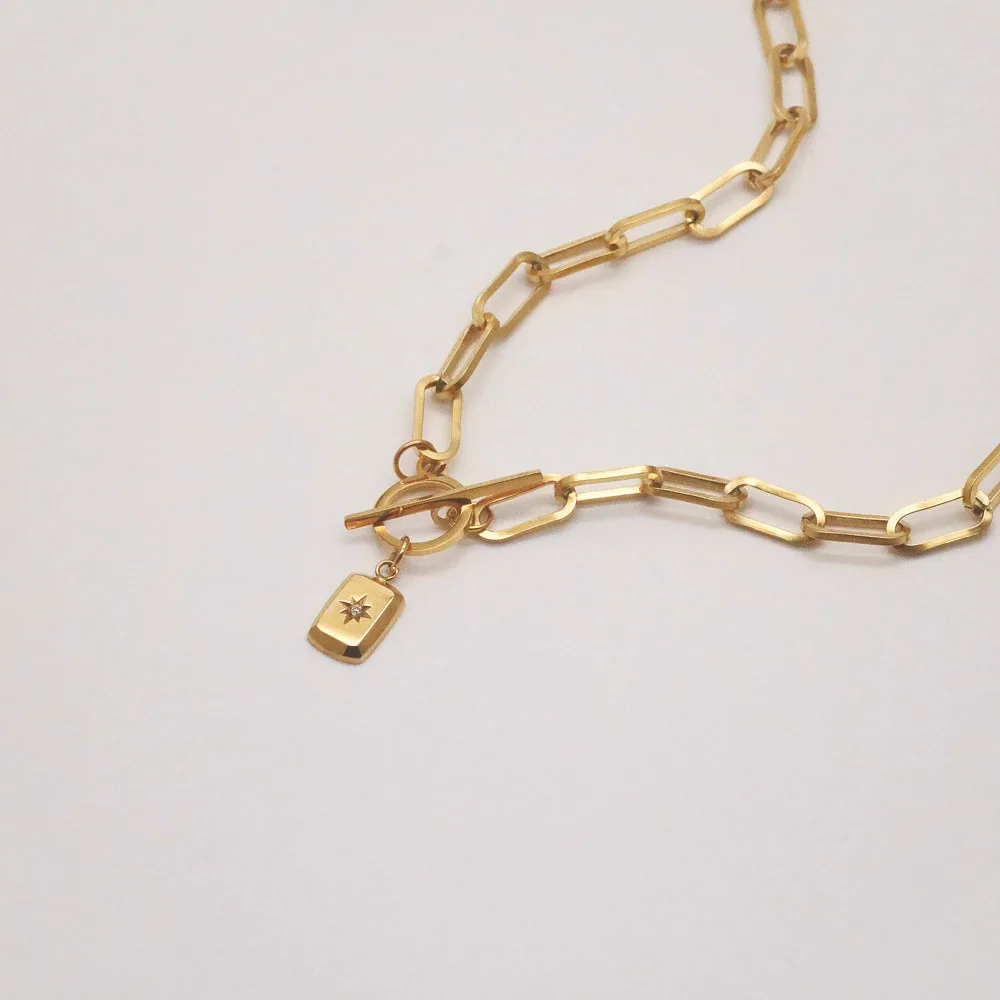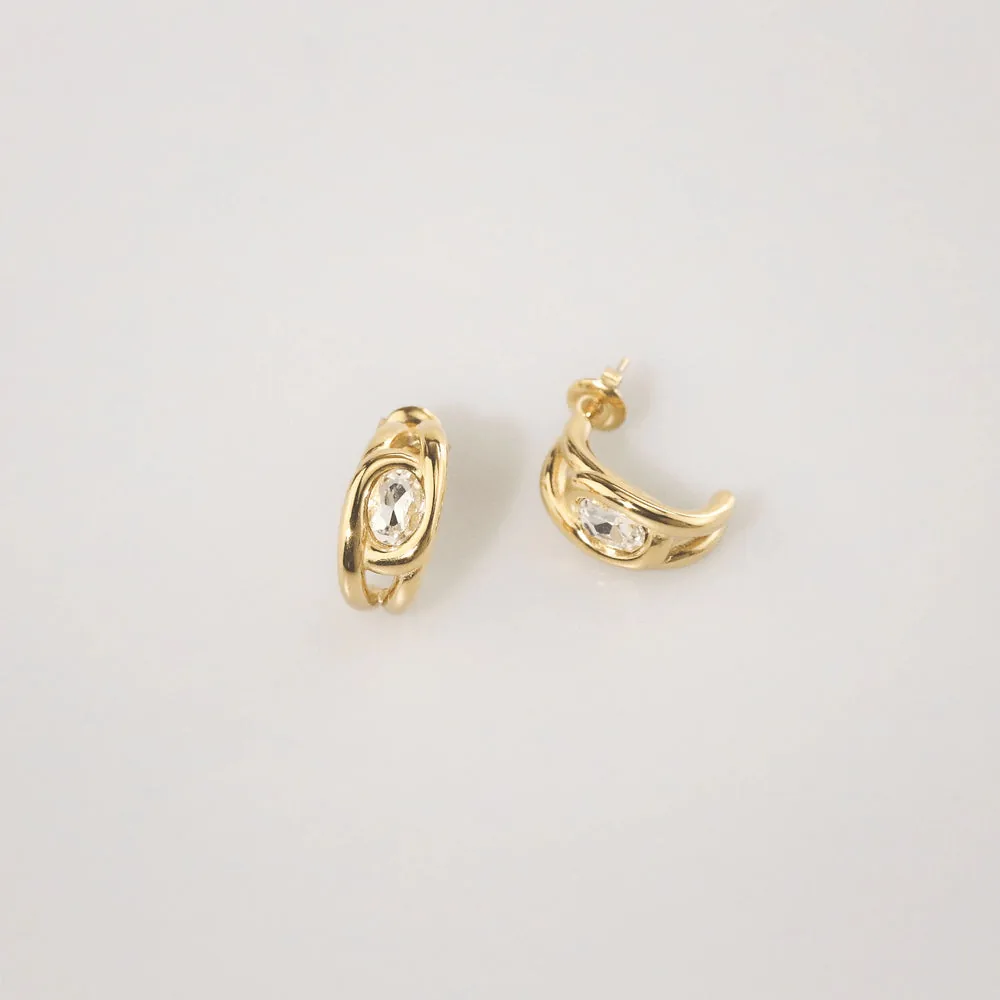
"Waterproof" is the single most over-promised word in jewelry sourcing — and the one that decides whether a piece reorders or comes back to your counter. A boutique buyer hears "waterproof" and pictures stock that never disappoints; a customer hears it and assumes the gold tone is permanent. When the two don't match, you eat the return. This guide is the honest version: what waterproof actually protects against, where it stops, how to vet a supplier's claim before you commit open-to-buy, and why genuinely water-safe stock is the stuff that quietly reorders all year.
Key takeaways
- "Waterproof" describes the core, not the color. A 316L stainless-steel core resists corrosion in showers, sweat and pools — but the gold plating on top still wears over years of daily contact. Honest stock says both.
- Water-safe stock reorders because it cuts "it changed color" returns. Pieces built on stainless steel hold their look far longer than brass or flash-plating, so customers come back instead of returning.
- Vet the claim, not the adjective. Ask what the core metal is, how thick the plating is, and what warranty backs it — a real spec sheet answers all three.
What "waterproof" actually means for a stockist
There is no jewelry that is magically immune to physics, so the useful question is: which part is protected, and from what? For a piece built on 316L stainless steel, the answer is specific and defensible.
316L (often sold as "surgical steel") contains roughly 16–18% chromium plus molybdenum. The chromium reacts with oxygen to form a thin, self-healing passive layer of chromium oxide on the surface — an invisible barrier that prevents the underlying metal from rusting. The molybdenum specifically improves resistance to pitting and crevice corrosion in chloride environments like seawater and pool water. That is the technical basis for the word "waterproof": the core doesn't corrode when it gets wet, salty or sweaty. We cover the metallurgy in depth in our stainless steel jewelry wholesale guide.
Here's the part most marketing leaves out, and the part your customers need to hear from you: the gold tone is 18k-gold plating over that steel core, not solid gold. Plating is a surface layer, and any surface layer wears with abrasion over years — against skin, fabric and other jewelry. "Waterproof" means the piece survives water; it does not mean the color is permanent. The honest framing — corrosion-resistant core, plating that wears slowly — is exactly what prevents the surprise that becomes a return. For the full plating vocabulary (and why this is plated, not vermeil and not solid gold), see our breakdown of gold-plated vs. vermeil vs. solid gold.
| Everyday exposure | 316L core (corrosion) | 18k plating (color) | What to tell the customer |
|---|---|---|---|
| Showers & hand-washing | Resists — no rust | Fine for daily contact | Wear it daily; you don't need to take it off |
| Sweat & workouts | Resists | Rinse & dry after heavy sweat | Safe; a quick rinse extends the finish |
| Pool & ocean (chlorine/salt) | Resists (molybdenum helps) | OK occasionally; rinse off | Swim-safe core; rinse after to protect the plating |
| Years of abrasion | Unaffected | Plating wears gradually | Color lasts years, not forever — backed by warranty |
Why tarnish-free stock reorders
Reorder rate is a returns story before it's a sales story. The fastest way to kill repeat business in demi-fine jewelry is the "it turned my skin green" or "the gold rubbed off in a month" complaint — both of which come from brass or thin flash-plating, not from a stainless core. A 316L base simply doesn't corrode the way brass does, so the most common failure mode disappears. Fewer surprise failures means fewer returns, and stock that doesn't come back is stock you reorder.
There's a skin-safety dividend too. Nickel allergy is the most common metal-contact allergy, and the EU caps how much nickel a skin-contact item may release at 0.5 µg/cm²/week under the EN 1811 reference method (0.2 µg/cm²/week for piercings). A 316L core is a low-nickel-release base, which is why "sensitive ears" customers keep coming back to it. "Waterproof" and "hypoallergenic" tend to travel together precisely because they both trace back to the same stainless core.
Practically, this is why water-safe earrings are the smartest first reorder for most boutiques: they're worn daily, exposed to water and sweat constantly, and they're the category where the "it changed color" complaint hurts most. Stocking the everyday core — studs, hoops and lightweight drops in earrings — before statement pieces keeps your open-to-buy on the SKUs that actually turn over. Our Couture's Corner line runs 287+ waterproof pieces, so the everyday core is deep enough to reorder against without chasing one-off styles.
How to vet a supplier's "waterproof" claim
Anyone can type "waterproof" on a product page. A defensible claim survives three questions, and a supplier who can't answer all three is selling you the adjective, not the product.
- What is the core metal? The answer you want is 316L (surgical) stainless steel. "Alloy," "brass with gold finish," or a vague "premium metal" is a red flag — brass under plating is the classic green-skin culprit.
- What's the plating? Real gold (10k or higher) bonded as a genuine electroplate, with a stated thickness, holds up. The U.S. FTC's 16 CFR Part 23 sets the floor: "gold-plated" requires a layer of at least 0.175 micron of 10k+ gold, and "heavy gold electroplate" requires at least 2.5 microns (23.4). Thickness is what separates jewelry that holds its tone for years from flash-plating that fades in a season.
- What backs the claim? A warranty is a supplier putting money behind the word. Couture's Corner stands behind every piece with a 1-Year Color Warranty — which only makes sense on stock that's genuinely built to survive water and wear.
One honesty test worth applying: does the supplier ever say plated? A vendor calling stainless-and-plating "solid gold" is either confused or hoping you are. The trustworthy ones describe the build exactly — corrosion-resistant 316L core, 18k plating, CZ stones (not diamonds) — because that precise description is what protects you at the point of sale.
Shipping, returns and terms across the US, UK and EU
For US stockists, Couture's Corner ships from a Colorado warehouse, typically in about 15 business days, on a $100 minimum order with NET-60 (0% interest) terms — and your first order ships with free returns, so you can test sell-through on water-safe stock with your own customers before committing budget. If you sell into the UK or EU, the same EN 1811 nickel limit applies to anything in direct, prolonged skin contact, so a documented 316L core isn't just a selling point — it's the compliance basis for stocking skin-contact jewelry in those markets. Always confirm current cross-border duties and import handling for your destination before a large first order.
For the wider sourcing picture — margins, MOQs and how to read a full spec sheet — start with our pillar guide on wholesale jewelry for boutiques, then browse the live water-safe range in the full catalog.
Waterproof jewelry wholesale FAQ
No, and an honest supplier won't claim that. "Waterproof" means the 316L stainless-steel core resists corrosion in showers, sweat and pools. The 18k-gold plating on top is a surface layer that wears gradually over years of daily abrasion, so the color lasts years rather than forever.
They overlap but aren't identical. Tarnish is corrosion of the base metal; a 316L core resists it because chromium forms a self-healing oxide layer. "Waterproof" specifically means the piece survives water, sweat and chlorine without that corrosion, which is why stainless-based stock is both tarnish-resistant and water-safe.
Yes. The 316L core resists corrosion from showering, sweating and pool or ocean water, with molybdenum specifically improving resistance to chloride and salt. To protect the plating long-term, advise customers to rinse and dry pieces after heavy chlorine or salt exposure.
Ask three questions: what is the core metal (you want 316L stainless steel, not brass), what is the plating and its thickness (real 10k+ gold electroplate per FTC 16 CFR Part 23), and what warranty backs it. A supplier who can answer all three is selling a real product, not just an adjective.
A documented 316L core is a low-nickel-release base, which is what the EN 1811 standard tests for. EU and UK rules cap nickel release at 0.5 µg/cm²/week for skin-contact items (0.2 for piercings), so a verified stainless core is both a selling point and the compliance basis for stocking skin-contact jewelry in those markets.
Open a Couture's Corner wholesale account
Stock water-safe, tarnish-resistant 18k-plated 316L from the full line — including bestselling waterproof stud earrings, abalone waterproof hoops and the Afton teardrop CZ earrings. $100 minimum · NET-60 terms · first order ships with free returns.
Open a wholesale account →